Adding a Battery to Existing Solar in Melbourne: What to Check First (2026)
Most Melbourne homes with solar can add a battery without touching the panels. What decides the right retrofit path, what the 2026 federal rebate pays on it, and the three things we check before putting a price in writing.
Just over half of the enquiries E3 Energy received in the past fortnight came from households that already have solar panels and want to add a battery to them. That matches what we see across Melbourne every winter: the panels are on the roof, the system works, and the power bill still went up. This guide covers what actually determines whether a battery can be added to your existing system, what the 2026 federal rebate pays on a retrofit, and what we check before we put a price in writing.
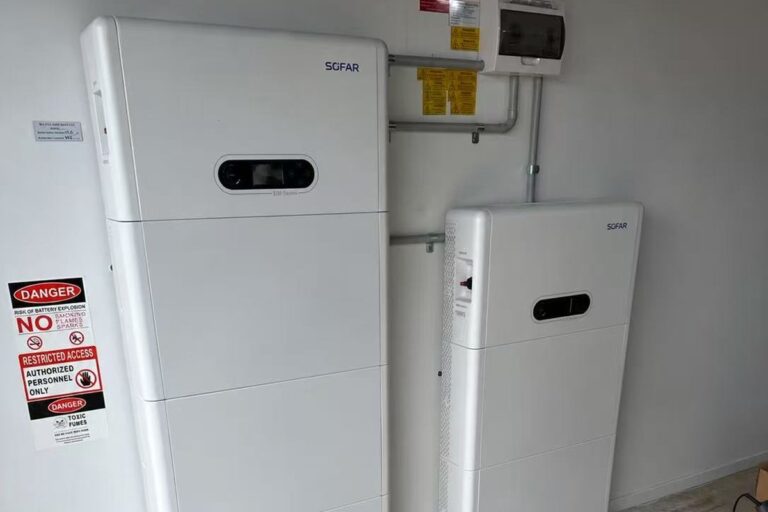
A battery retrofit on one of our Melbourne installs. The battery tower and its inverter sit beside the switchboard; the existing solar stays where it is.
Why winter is when Melbourne households notice
In August a Melbourne roof produces a fraction of what it makes in January, and it produces it in the middle of the day, when many houses are empty. The evenings, when the heating and the cooking and the hot water happen, are long and grid-supplied. So a solar-only household spends winter exporting its cheapest electricity at lunchtime and buying its most expensive electricity at dinnertime, and the bill shows it.
A battery does not create more winter sun. What it does is move the midday generation you already own into the evening, so less of your usage is bought at retail rates. Whether that arithmetic works for your household depends on your usage pattern and tariff, which is why we wrote a separate guide on whether a battery is worth it in Victoria rather than promising a number here.
Will a battery work with my existing solar?
For most Melbourne homes with solar installed in the last ten years, yes. The panels almost never need to change. What decides the right way to do it is the equipment between the panels and your switchboard:
Keep your existing inverter, add a battery system with its own inverter. This is the most common retrofit path. The battery system, for example a Fox ESS CQ7, arrives with its own inverter, so your existing solar keeps running exactly as it does today and the battery charges from the surplus the house is not using. Nothing about your current system is rewired.
Replace the inverter if it is due anyway. Solar inverters have a working life of roughly a decade. If yours is approaching that age, it can make sense to move the panels onto a new hybrid inverter that manages the battery as well, so you renew the ageing component and add storage in one visit.
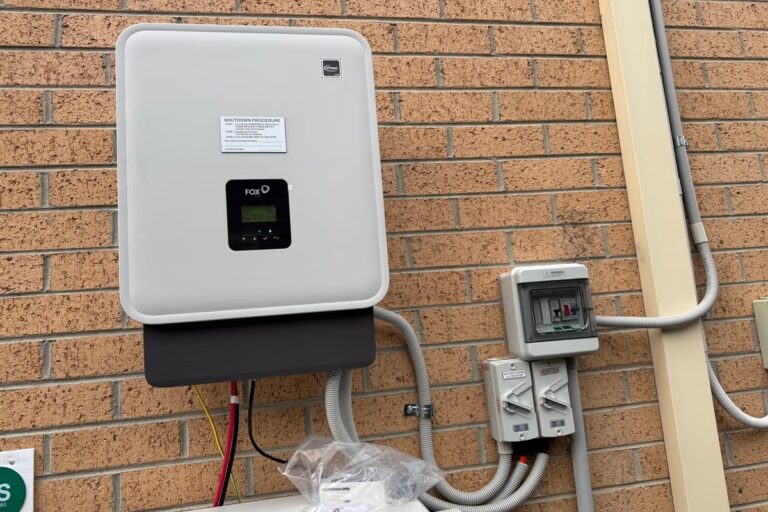
Check the switchboard while you are at it. Some older boards need work before any battery can be connected. This is the item most likely to add cost to a retrofit, which is why we ask for a photo of the board before quoting rather than surprising you on install day.
Which path fits your house comes down to three facts: the model and age of your inverter, the state of your switchboard, and whether your supply is single or three phase. All three are checkable from photos, none of them require a site visit to establish, and together they are why two neighbours can get honestly different quotes for the same battery.
The rebate treats a retrofit the same as a new system
The federal Cheaper Home Batteries Program applies to a battery added to existing solar just as it does to a brand-new solar-plus-battery system. Since 1 May 2026 it pays on a tiered, per-usable-kilowatt-hour basis:
Usable capacity
Approx rebate per kWh (2026)
First 14 kWh
~$270
14 to 28 kWh
~$162
28 to 50 kWh
~$40
Above 50 kWh
Not subsidised
Rates are derived from the current DCCEEW small-scale technology certificate settings and change with them; DCCEEW describes the overall effect as a discount of around 30%, applied by your installer at the point of sale. Two details matter for retrofit households in particular. It is one rebate per property, so a battery added now uses your address’s single claim. And the rate steps down again on 1 January 2027, which at current settings is worth roughly $600 on a 14 kWh battery. The full dollar workings, eligibility rules and how the Victorian schemes interact are in our Victorian battery rebate guide.
Notice where the first tier ends. The rebate pays its highest rate on the first 14 kWh and drops sharply after that, which is a large part of why our standard retrofit package is sized where it is, and why we treat “how big” as a question about your evening usage rather than a bigger-is-better default. Our guide to sizing a battery from your bills works through it properly.
What it costs
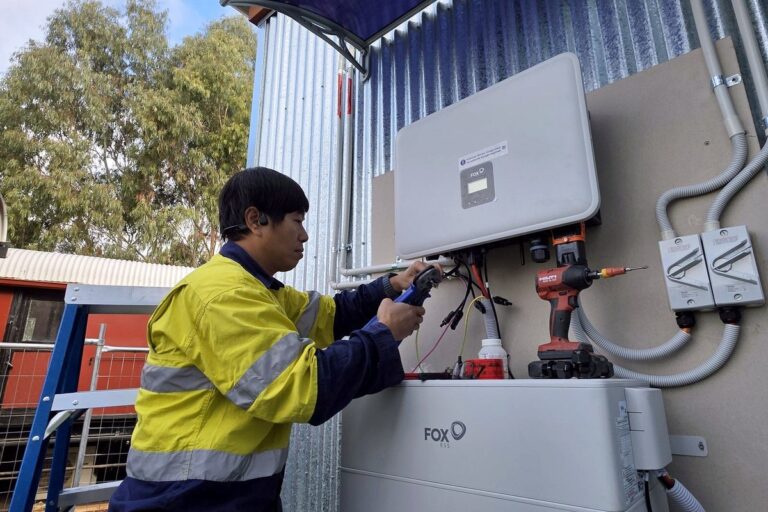
Our standard retrofit battery is the Fox ESS CQ7 at 14.04 kWh with its own 8 kW inverter, from $5,299 installed for eligible existing-solar homes, with the final price confirmed in writing after we have seen your bill, inverter and switchboard. The CQ7 stacks in 7.02 kWh modules, so the same product line extends later if your usage grows, an EV arrives, or you add rooms; the platform runs to 98.28 kWh, which is more than any Melbourne house needs; the point is that you will not outgrow it. We compared it against the premium alternative we also install in Sigenergy vs Fox ESS.
The same install, one step back. Battery tower, inverter above it, existing meter board to the left. A typical retrofit footprint is one wall.
What we check before we quote
We size retrofits from evidence, not from a package menu. Before a written quote we ask for three things:
Your last quarterly bill. It shows how much electricity you buy, when you buy it, and what you export. That pattern, not the size of your roof, is what a battery should be sized to.
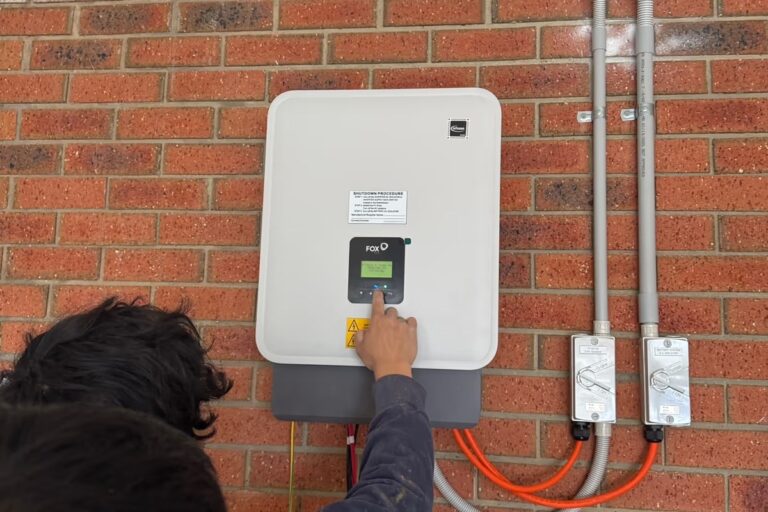
Your inverter model. A photo of the label is enough. It tells us the age, the capacity and which retrofit path applies.
A photo of your switchboard. So any board work is in the quote from day one, not discovered on the ladder.
Then we model the battery against your actual usage before recommending a size, and we put the whole number in writing. Two months after installation we come back to the data and check what the system is actually doing against what we modelled. We have not found another Melbourne installer promising that check, and we make it because a battery sized from your real bills should be able to face them afterwards.
E3 Energy is a Melbourne-based installer with more than 500 installations completed, a NETCC-approved seller and a Solar Victoria authorised retailer.
Questions we hear every week
Can I add a battery without touching my existing panels?
In most cases yes. The common retrofit path adds a battery system with its own inverter alongside your existing solar, and the panels and their inverter stay exactly as they are. The main situations where we recommend changing anything are an inverter near the end of its working life or a switchboard that needs work before any battery could be connected.
Does a retrofit battery get the federal rebate?
Yes. The Cheaper Home Batteries Program applies to batteries installed with new or existing solar. It is claimed once per property, your installer applies it at the point of sale, and DCCEEW describes the effect as a discount of around 30% on the battery cost. The rate steps down again on 1 January 2027.
How much does it cost to add a battery in Melbourne?
Our standard package, the Fox ESS CQ7 at 14.04 kWh with its own 8 kW inverter, is from $5,299 installed for eligible existing-solar homes with the federal rebate reflected. The written price follows an assessment of your bill, inverter and switchboard, because those three facts are what genuinely move the number.
Will I still get my feed-in tariff?
Yes, on whatever surplus remains. The battery stores your excess solar first and anything beyond a full battery still exports. Feed-in earnings usually fall after a battery is added, but each stored kilowatt-hour offsets electricity you would otherwise buy at retail rates, which in the evening is worth several times a typical feed-in rate.
The next step
If you have solar and a recent bill, that is everything we need to start. Send the bill through our free energy assessment or call 1300 254 507, and we will tell you which retrofit path your house is on and what it would cost, in writing, before you commit to anything.