Will a Home Battery Keep the Lights On in a Blackout? What Backup Actually Means
Solar shuts down in a blackout by design. A battery can keep your house running, but only if backup was designed into the job. What it takes, what runs, and the five questions to ask before you sign.
On 13 February 2024, about 620,000 Victorian homes and businesses lost power in a single afternoon. By the next morning around 285,000 were still without supply, and in some areas restoration took the better part of a week.
Plenty of people with rooftop solar discovered something that day: their panels stopped as well. The sun was out and the roof was doing nothing.
This is the question we get asked most often in the week after a storm, so here is the straight answer. A home battery can keep your lights on. It only does that if it was bought and wired to do it. Backup is a scope of work, not a feature that arrives in the box.
Why your solar shuts down when the grid does
Grid connected inverters in Australia have to comply with AS/NZS 4777.2. One of the things that standard requires is anti-islanding protection. When the inverter detects that the grid is no longer there, it disconnects and stops producing.
That is deliberate, and it is not a fault in your system. If rooftop solar kept pushing power into the street during an outage, the crews repairing the network would be working on wires that are meant to be dead. So the moment the grid drops, a standard solar system stops, at noon on a clear day just the same as at night.
Adding a battery does not change that rule. What a battery can do is form a small separate island inside your house, walled off from the street, and run that. Creating that island is the part that has to be designed, wired and paid for.
What backup actually requires
Four things have to be in place, and only the first one is a product decision.
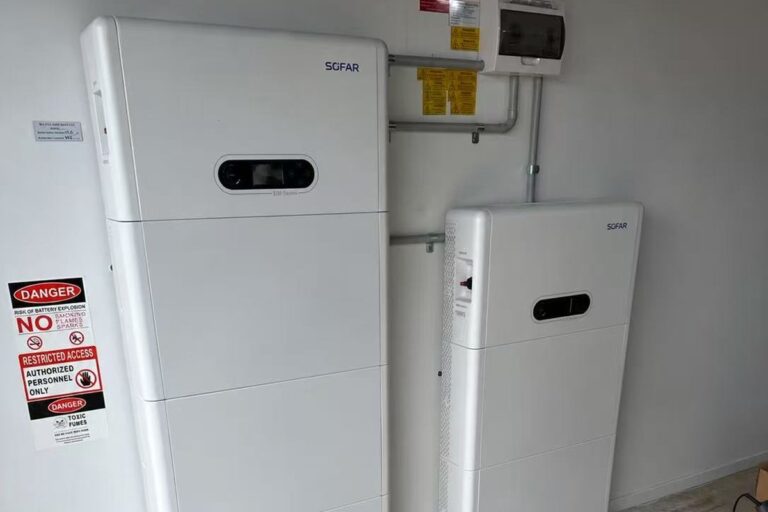
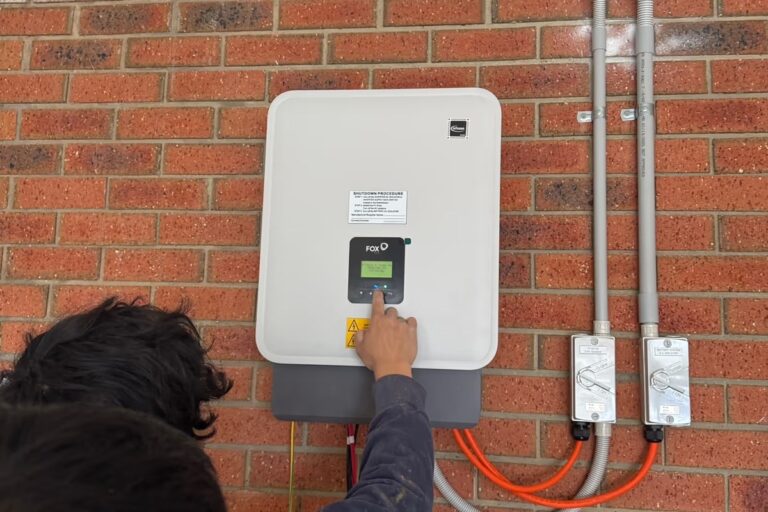
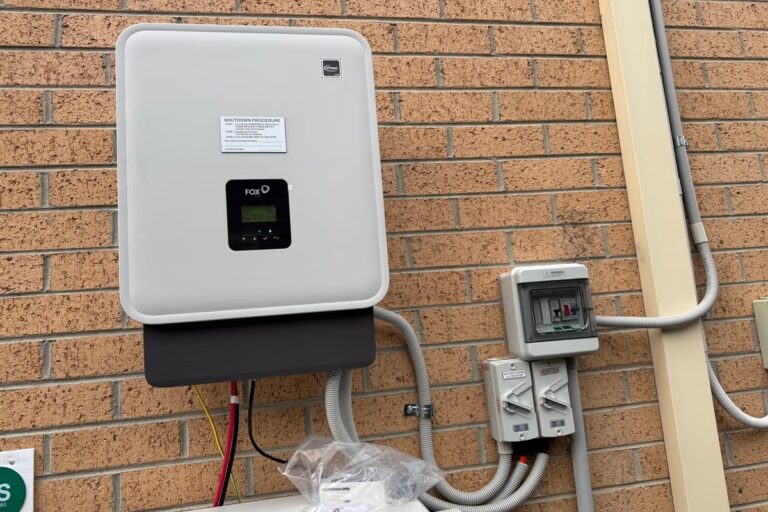
An inverter that can produce backup output. Not every hybrid inverter has a backup port, and on some systems it is an optional extra rather than standard. Both of the ranges we install, Fox ESS and Sigenergy, can be configured for backup, but configured is the operative word.
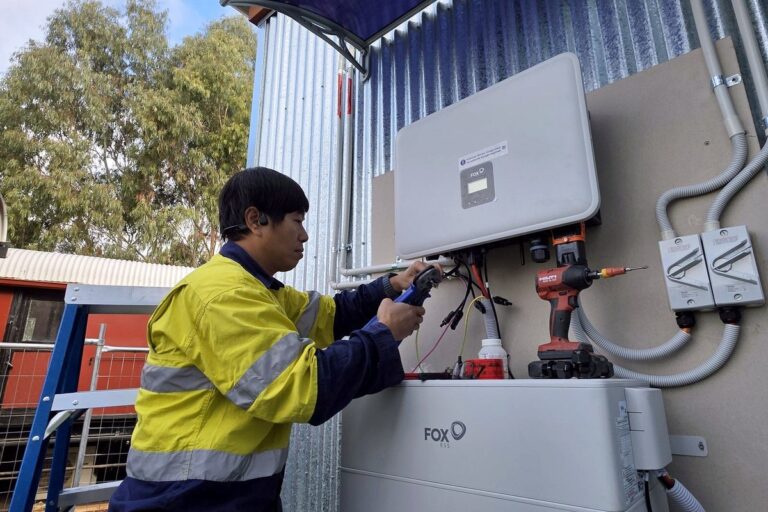
A separate backup circuit or subboard. The circuits you want alive during an outage have to be moved onto their own supply, physically. An electrician does this at your switchboard. It is real labour, and on an older board it can mean an upgrade first.
A device that isolates you from the street. Before your house can run its own island, it has to be disconnected from the network automatically and reliably. This is the piece that keeps the anti-islanding rule satisfied.
Room and compliance at the board. Battery systems already need their own protection and isolation under AS/NZS 5139. Adding backup adds more. If your board is full, that becomes part of the job.
None of this is exotic. It is just work that has to be quoted, and it is the single most common thing left vague in a battery quote. If the words “backup ready” appear without a list of circuits, you have not been quoted for backup.
The number that decides what runs is kW, not kWh
Two figures matter here and most people only look at one.
Capacity, measured in kilowatt hours, tells you how long. Backup output, measured in kilowatts, tells you how much at once.
A large battery with a modest backup output will happily run a fridge, lights, the modem and a few power points all night, and still trip the moment somebody puts a kettle on while the oven is heating. The battery is not empty. It has hit its instantaneous limit.
This is why “whole home backup” deserves a follow up question. Whole home in the sense that every circuit is connected is one thing. Whole home in the sense that you can use everything at once is another, and it usually requires a bigger inverter, sometimes three phase, and a bigger bill.
What normally goes on backup, and what normally does not
For a typical Melbourne house, the circuits that earn their place are the ones that stop an outage from becoming a problem rather than an inconvenience.
Usually on backup:
Fridge and freezer
Lighting circuits
General power outlets in the kitchen, living area and one or two bedrooms
Modem and internet equipment
The fan and controls on gas ducted heating
Usually left off:
Electric hot water
Ovens and induction cooktops
Ducted air conditioning
EV chargers
Pool pumps
The second list is not a limitation of the technology. It is arithmetic. Those loads are large, and putting them on backup means paying for an inverter big enough to start them.
Worth knowing before you decide: a fridge is a small load. The energy rating label on the front of yours gives an annual kilowatt hour figure, and dividing it by 365 tells you what it actually costs you per day of backup. Most people are surprised by how little it is. The energy rating label explainer shows you which number to read.
There is a gap when it switches over
Backup is not an uninterruptible power supply. When the grid fails, the system has to detect that, isolate, and then re-form supply on the backup circuits. There is a brief interruption while that happens.
In practice this means clocks reset and a desktop computer will reboot. Everything then runs normally. If you have something that genuinely cannot tolerate any interruption, such as a medical device, say so before you get quoted rather than after, because that changes the design.
Day two is a different question to day one
For an outage that lasts one evening, capacity is the whole story. For the storm outages that run into days, the question that matters is whether your solar can restart while you are running off grid.
Some hybrid systems can bring the solar array back up inside the backup island and recharge the battery through the day. Others cannot, so the battery runs down and stays down until the network returns. This one design detail decides whether a multi-day outage is survivable or just quieter.
Ask the question in exactly these words: during an extended outage, will my solar recharge the battery, or only the grid? A vague answer is an answer.
Battery or generator
We get compared to generators often enough that it is worth being fair about it.
A generator is cheaper to buy and runs as long as you keep feeding it fuel, which makes it hard to beat for a rural property that loses supply for days at a time. It also needs someone home to start it, needs fuel stored safely, has to run outdoors, is loud, and does nothing for you on the 360 days a year when the power stays on.
A battery starts by itself whether you are home or not, makes no noise, and spends every other evening lowering your bill by using the solar you already generated. It is limited by capacity and by that kilowatt ceiling.
If your priority is surviving a week without power in a bushfire zone, a generator has a real argument. If your priority is not losing a fridge full of food during a summer storm while also cutting your bill, a battery does both jobs.
Five questions before you sign anything
Which exact circuits are on backup? Ask for the list written on the quote, not described on the phone.
What is the backup output in kW? And what happens when the house asks for more than that.
Will solar recharge the battery during an extended outage?
Does my switchboard need work to make backup possible, and is that in this price?
Is there a reserve setting that holds charge back for outages, and where will you set it? A battery that trades down to empty every evening has nothing left when a storm arrives at 9pm.
That last one is the setting almost nobody is told about. It costs you a little bill saving to keep a floor of reserve, and it is the difference between having backup and having had backup.
Frequently asked questions
Will my solar work in a blackout if I do not have a battery?
No. Grid connected inverters must comply with AS/NZS 4777.2, which requires them to disconnect when the grid is not present. This protects the crews repairing the network. Without a battery and backup wiring, a solar system produces nothing during an outage.
Does every home battery give you blackout backup?
No. Backup needs an inverter capable of backup output, a separate backup circuit at the switchboard, and a device that isolates your house from the grid. Any of those can be left out of a quote, and a battery without them will not power your house during an outage.
How long will a battery run my house in a blackout?
It depends on which circuits are on backup and what you use, not on the battery size alone. A fridge, lights, internet and a few power points are a small load, and a typical home battery will carry them through a night comfortably. Add an electric oven or ducted air conditioning and the answer changes to hours or minutes.
What is the difference between whole home backup and essential circuits?
Essential circuits means selected circuits are moved onto a backup supply. Whole home means the entire switchboard is backed up, which needs more wiring and a larger inverter to start big loads. Essential circuits covers most households for a fraction of the cost.
Will the backup switch on automatically?
Yes. You do not need to be home or press anything. There is a short interruption while the system isolates and re-forms supply, so clocks and computers will notice, then the backed up circuits run normally.
Can I add backup to a battery I already have?
Sometimes. It depends on whether your inverter has a backup output and whether your switchboard has room for the extra circuit and protection. It is worth an assessment rather than a guess, and it is the same check we do when adding a battery to existing solar.
The short version
Solar alone goes dark in a blackout, by design. A battery can keep your house running, but only if backup was designed into the job: the circuits chosen, the board wired, the isolation device fitted, and the kilowatt ceiling matched to what you actually want running.
Everything above is decided before install day, which is why it belongs in the conversation before you sign. If you want to see how the rest of the job runs, we have written up what actually happens on installation day, and if you are still working out capacity, start with what size battery you actually need.
Send us your latest power bill and tell us which circuits you would want alive in an outage. We will size it against your own usage and put the backup list in writing on the quote.