Sigenergy Battery Review (2026): An Australian Installer’s Verdict
A detailed review of the Sigenergy SigenStor from installers who fit it: real usable capacity per module, the full warranty terms, the 2025 ACCC recall, EV charging and V2H, and what actually moves the price.
Sigenergy is the most searched home battery brand in Australia right now, and most of what is written about it is either a spec sheet copied off the manufacturer’s site or a sales page with the awkward parts left out. We install the Sigenergy range across Melbourne, which means we have read the warranty document rather than the warranty headline, and we have had to explain the 2025 recall to customers in person. This review is what we tell them.
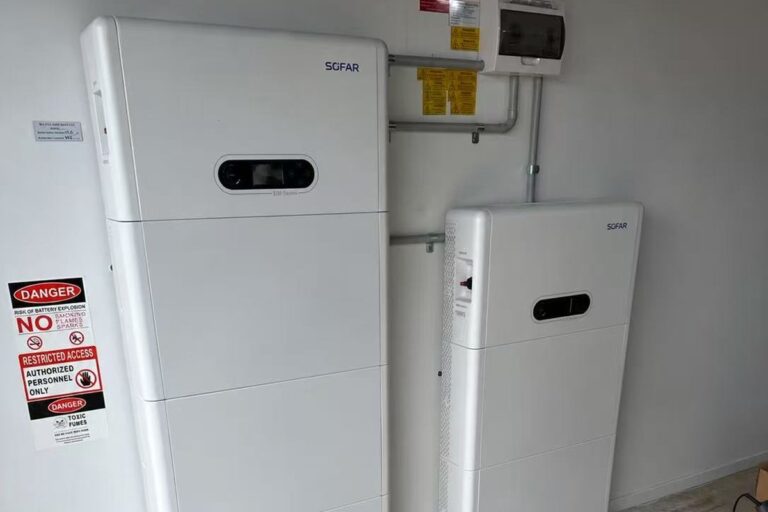
A SigenStor on one of our Melbourne installs. The controller sits on top of the battery stack, so the whole system is one column against the wall.
What Sigenergy actually sells in Australia
Half the confusion around this brand comes from the naming, so it is worth getting straight before anything else. Sigenergy does not sell “a battery”. It sells a system with three separate parts, and you can be quoted very different systems under the same brand name.
Sigen Energy Controller (SigenStor EC). The brains and the inverter in one box. Single phase from 3 kW to 12 kW, three phase from 5 kW to 30 kW. It sits at the top of the stack.
Sigen Battery (SigenStor BAT). The battery modules that stack underneath. One controller takes one to six modules.
Sigen EV DC Charging Module. An optional DC electric vehicle charger that clips into the same stack instead of being a separate box on the wall.
There are four battery modules in the Australian range. Manufacturer marketing quotes the total energy capacity. The number that decides what your house can actually draw on, and what the federal rebate pays you, is the usable energy capacity, and that figure lives in the warranty document rather than the brochure.
Module
Total energy (kWh)
Usable energy (kWh)
Usable share
Max charge/discharge
Warranted throughput
SigenStor BAT 5.0
5.38
5.2
96.7%
2,500 W
19.76 MWh
SigenStor BAT 6.0
6.02
6.0
99.7%
3,000 W
22.19 MWh
SigenStor BAT 8.0
8.06
7.8
96.8%
4,000 W
29.64 MWh
SigenStor BAT 10.0
9.04
9.0
99.6%
4,600 W
33.29 MWh
Total energy and maximum power come from Sigenergy’s Australian specifications. Usable energy and throughput come from the Factory Limited Warranty for Australia and New Zealand. The usable share is the two divided.
That last column is the interesting one, and we have not seen anyone else point it out. The two newer modules, the 6.0 and the 10.0, give you almost all of their rated capacity, at 99.7% and 99.6%. The older 5.0 and 8.0 give you about 96.7%. On a six-module stack that gap is worth more than a kilowatt-hour of real storage, and because the federal rebate is calculated on usable capacity, it is also worth money. If a quote lists module capacity without saying whether it is total or usable, ask which one it is before you compare it against anything.
Sigenergy’s marketing states a 100% depth of discharge, footnoted as referring to the usable energy capacity. That footnote is doing real work. It means you can discharge all of the usable energy, not that the usable energy equals the rated energy. Both statements are true and they are not the same statement.
How big can it get
You can count the modules on the stack. One controller takes one to six, so you start with what your evenings need and add layers later.
One controller carries one to six battery modules, which puts a single SigenStor between roughly 5 kWh and 54.24 kWh of total capacity depending on which module you stack. With the 8.06 kWh modules the ceiling is 48.36 kWh. With the 9.04 kWh modules it is 54.24 kWh. For commercial sites you can run multiple SigenStors in parallel.
The modules connect with guided quick connectors that plug together as they stack, rather than being hand wired one to the next. Each battery pack also has its own DC-DC optimiser, which is why Sigenergy can support mixing old and new modules in the same stack. If you have ever been told you cannot expand a battery because the new modules would drag down to the state of the old ones, that is the problem the optimiser is designed around. In practice it means adding a module in three years is a real option rather than a brochure promise.
What it costs, and what moves the number
We quote Sigenergy after an assessment rather than advertising a package price, and it is worth being blunt about why. A Sigenergy quote is at least three decisions, not one: which controller size, how many battery modules, and whether you are adding the DC EV charging module. Two households with identical bills can land thousands apart on the third decision alone.
What moves the price, roughly in order of how much it moves it:
Number of battery modules. The single biggest line, and the one worth getting right rather than rounding up. See how to size a battery to your bills.
Single phase or three phase. Three phase controllers cost more and are specified by your existing supply, not by preference.
The EV DC charging module. Optional, and the difference between 12.5 kW and 25 kW is a real cost step.
Backup scope. Which circuits stay live in an outage is a design decision with switchboard work attached to it.
Site work. Switchboard condition, meter, cable route, and network approval requirements.
Against that, the federal Cheaper Home Batteries Program takes a discount off the upfront cost, described by DCCEEW as around 30%, applied by your installer at the point of sale. Our Victorian battery rebate guide covers the dollar side. What is worth understanding here is how the rebate interacts with a stackable battery specifically.
The rebate maths on a stackable battery
Since 1 May 2026 the federal discount has been paid on a tapering scale. The first 14 kWh of usable capacity earns the full rate, capacity from 14 to 28 kWh earns 60% of it, capacity from 28 to 50 kWh earns 15%, and anything above 50 kWh earns nothing. Because SigenStor is stacked in modules, you can see exactly where each additional layer lands.
Using the STC Factor of 6.8 that applies from May to December 2026, and the usable capacities from the warranty document:
Stack
Usable capacity
STCs created
STCs per usable kWh
2 × BAT 8.0
15.6 kWh
101.7
6.52
3 × BAT 8.0
23.4 kWh
133.6
5.71
3 × BAT 10.0
27.0 kWh
148.2
5.49
6 × BAT 8.0
46.8 kWh
171.5
3.66
6 × BAT 10.0
54.0 kWh
174.8
3.24
Calculated from the STC Factor and capacity tapers published by DCCEEW. The dollar value of a certificate depends on the STC market price on the day of installation.
Read the bottom two rows together. Going from six 8.06 kWh modules to six 9.04 kWh modules adds 7.2 kWh of usable storage, an increase of 15.4%, and adds 3.3 STCs, an increase of 1.9%. The extra capacity is above the 50 kWh cap, so the rebate stops paying for it. That does not make the larger stack wrong, and a household with an EV and a heat pump may well want it. It does mean the last few kilowatt-hours are close to full price, and nobody selling you a maximum configuration is likely to mention that.
One more detail worth noticing: three of the 9.04 kWh modules land at 27.0 kWh usable, which sits just under the 28 kWh threshold where the rate drops from 60% to 15%. Sigenergy’s own Australian marketing points at that configuration. The arithmetic behind it is real.
The 2025 recall, in full
If you have searched this brand you have probably seen the word recall, and an installer review that skips it is not a review. Here is the whole thing, from the ACCC notice rather than from forum summaries.
On 19 November 2025, Sigenergy Australia Pty Ltd published an electrical safety recall, ACCC reference PRA 2025/20703, covering SigenStor EC 8.0, 10.0 and 12.0 kW single phase Australian energy controllers with quick connect AC plugs. The affected units were available for sale between 4 March 2025 and 18 November 2025.
The stated reason is that “the AC plugs may overheat and become damaged, posing a risk of fire”. The notice adds that if an overheating plug led to a fire it could cause property damage, serious injury or death, that incidents have occurred, and that no property damage, injuries or deaths have been reported.
The remedy has three parts. Affected systems that are connected to the internet receive a firmware update that lets Sigenergy temporarily reduce AC output if a unit runs at sustained full load, which stops the plug overheating, and the notice states that online units have already received it. Owners then receive a free replacement product with an updated AC plug, arranged through their retailer or a Sigenergy Australia service partner. Sigenergy is also adding two years of warranty on the affected product.
Three things follow from this for anyone buying now.
It was the controller, not the battery. The battery modules were not part of this recall, and the fault was in an AC connection design rather than in cells or chemistry.
The design has changed. Sigenergy moved to an OT terminal style AC connection for the affected products. A system quoted today is not the recalled build.
It is still a fair question to ask your installer. If you are buying a single phase 8, 10 or 12 kW controller, ask in writing which AC connection design your unit uses. If you already own one bought in that window, check that your system is online and contact Sigenergy Australia at the address on the recall notice.
Our own read: a manufacturer that pushes a protective firmware update, replaces hardware free and extends the warranty is behaving the way you would want. The part that should still inform your decision is that this was a young product line in a market it had entered recently, and the fault surfaced in the field rather than in testing.
The warranty, read properly
IP66 rated, so it can go outside. Natural convection cooling on the battery modules means no fan noise from the stack.
Sigenergy’s Australian and New Zealand warranty covers three parts on three different clocks, and the shortest one surprises people.
Sigen Battery: 10 years.
Sigen Energy Controller: 10 years.
Sigen EV DC Charging Module: 3 years.
Decorative strip lighting in the cover: 2 years.
If the EV charger is a significant part of why you are buying the system, that three year term deserves a conversation before you sign, not after.
Separately from the product warranty there is a performance warranty. Sigenergy warrants that the battery retains at least 70% of its usable energy for 10 years, or until a minimum throughput is reached, whichever comes first. The throughput figures are in the module table above. A BAT 8.0 is warranted to 29.64 MWh, which is roughly 3,800 full cycles of its 7.8 kWh usable capacity. For a household cycling once a day that is comfortably beyond ten years, which is why the ten year term is usually the binding limit rather than the throughput.
Two details in the fine print worth knowing. The warranty applies to products installed on or after 1 November 2023. And the start date is the date of installation and registration, or 180 days after the unit shipped from the factory if it has not been installed by then, whichever comes first. A unit that sat in a warehouse for most of a year has already spent some of its warranty.
EV charging and V2H, with the caveat spelled out
The DC charging module is the strongest reason to choose this system over a conventional battery. It charges an electric vehicle at up to 12.5 kW or 25 kW over CCS2, with a 150 V to 1000 V output range, and it takes DC power directly from the battery and the panels rather than converting to AC and back. Authentication can be an RFID card, the app, or none at all. It is IP66 and air cooled.
Now the caveat, which is the part most pages leave out. Sigenergy markets the system as V2X ready, meaning vehicle-to-home and vehicle-to-grid. Its own footnote states that V2X functionality is limited by the vehicle’s capabilities, and that once the relevant standards are published the feature can be enabled through an over-the-air update. In plain terms: the hardware is bidirectional today, the feature is not switched on for Australian households today, and turning it on depends on standards and on your specific car. Buy the system for what it does now. Treat V2H as an option you have bought the hardware for, not a capability you are buying.
Living with it: the app, VPPs and the physical install
The system is managed through the mySigen app, which is where you see generation, consumption, battery state and charging, and where you set schedules. The controller has an integrated energy management system, so behaviour is set on the unit rather than through a separate controller box.
On virtual power plants, the system is VPP capable, which matters for the federal rebate because eligible batteries have to be capable of joining one. Whether you actually enrol, and with which retailer, is a separate commercial decision with its own trade-offs, and capability is not the same as a signed VPP agreement.
Physically, the specifications that decide whether it suits your house:
IP66 on the controller, the battery and the EV DC module, so an outdoor wall is fine.
Natural convection cooling on the battery modules. No fan in the battery stack, which matters if it is going near a bedroom window.
Floor standing or wall mounted. Tall stacks generally sit on the ground.
Battery module voltage below 36 V, with a five layer protection scheme and 314 Ah cells.
Heating pad scheduling for cold weather performance, which is more relevant in a Victorian winter than most brochures assume.
Up to 4 MPPT trackers on the controller, and a maximum 2.0 DC to AC ratio on single phase, which is what lets you oversize the solar array relative to the inverter.
200% peak output in off-grid mode, which is what gets a motor load such as a pump or an air conditioner started during an outage.
Who should not buy one
We install this brand and we still talk people out of it, so this section is not decoration.
If you have no electric vehicle and no plan to get one, you are paying for an integrated DC charger and a V2X-ready architecture that your household will never use. A conventional stacked battery paired with a separate inverter usually gives you a lower cost per usable kilowatt-hour, and for a lot of Melbourne homes that is the better call. Our comparison against Fox ESS works through where each one wins.
If your evening and overnight usage is small, the same logic applies more sharply. The system is designed to scale, and scaling is only worth paying for if there is load to justify it.
If you want a brand with fifteen years of Australian field data behind it, this is not that brand. Sigenergy is a recent entrant that has grown quickly, and the 2025 recall is the kind of event that happens to young product lines. That is a reasonable thing to weigh, and it is a different question from whether the current product is good.
What we think, after installing them
The engineering is genuinely ahead of most of the market. Putting the inverter, the battery, the energy management and a DC EV charger into one stack removes boxes, cabling and failure points from a wall that usually ends up crowded. The per-pack optimiser makes future expansion real rather than theoretical. The 6.0 and 10.0 modules giving back more than 99% of their rated capacity is a better number than most of the market manages.
The reservations are about maturity rather than design. A three year warranty on the EV DC module is short next to ten on everything else. V2X is sold as a headline and delivered as a future update. And the recall, handled well as it was, is a reminder that this is a fast-moving product line.
For a household with an EV, or one that expects to have one inside the warranty period, it is the most coherent system we install. For a household without one, we will usually tell you to spend less.
How we quote it
E3 Energy is based in Mitcham and installs across Melbourne and Victoria. We are a Solar Victoria Authorised Retailer and a New Energy Tech Consumer Code (NETCC) Approved Seller, and we install both Sigenergy and Fox ESS, so the sizing conversation happens before the product conversation. We start from your usage data, work out what your evenings actually need, and tell you when a smaller system is the right answer. Under the federal program the battery has to be on the Clean Energy Council approved list and the installer accredited by Solar Accreditation Australia, whoever you buy from.
Frequently asked questions
Is the Sigenergy battery any good?
The hardware is strong. It integrates the inverter, battery, energy management and an optional DC EV charger into one stack, the newer battery modules return more than 99% of their rated capacity as usable energy, and expansion is genuinely practical because each pack has its own optimiser. The reservations are a three year warranty on the EV charging module, V2X that is hardware-ready but not yet enabled, and a short track record in Australia.
Was there a Sigenergy recall in Australia?
Yes. On 19 November 2025, Sigenergy Australia recalled SigenStor EC 8.0, 10.0 and 12.0 kW single phase energy controllers sold between 4 March 2025 and 18 November 2025, under ACCC reference PRA 2025/20703, because the AC plugs could overheat and pose a fire risk. The battery modules were not affected. The remedy is a firmware update, a free replacement with a redesigned AC connection, and two extra years of warranty. Systems quoted now use the updated design.
How much does a Sigenergy battery cost in Australia?
It depends on the controller size, how many battery modules you stack, and whether you add the EV DC charging module, so we quote after an assessment rather than publishing a package price. The federal Cheaper Home Batteries Program takes a discount off the upfront cost, which DCCEEW describes as around 30%, applied by your installer at the point of sale.
What is the usable capacity of a Sigenergy battery?
Per module, the Australian warranty lists 5.2 kWh usable for the BAT 5.0, 6.0 kWh for the BAT 6.0, 7.8 kWh for the BAT 8.0 and 9.0 kWh for the BAT 10.0. One controller takes up to six modules. Usable capacity is the figure the federal rebate is calculated on, so it is the one to compare between quotes.
How long is the Sigenergy warranty?
In Australia and New Zealand the battery and the energy controller carry 10 years, and the EV DC charging module carries 3 years. Separately, the battery is warranted to retain at least 70% of its usable energy for 10 years or until a stated energy throughput is reached, whichever comes first.
Can a Sigenergy battery charge my EV?
Yes, through the optional Sigen EV DC charging module, at up to 12.5 kW or 25 kW over CCS2, taking DC power directly from the battery and solar. Vehicle-to-home and vehicle-to-grid are a different matter: the hardware is bidirectional, but Sigenergy states the feature depends on your vehicle and on published standards, and would be enabled later by an over-the-air update.
How many battery modules can I add later?
One controller supports one to six battery modules, so a system that starts with two has room for four more. Each pack carries its own DC-DC optimiser, which is what allows newer modules to be added alongside older ones without the stack being limited by the weakest pack.
Is Sigenergy better than Tesla or Fox ESS?
We install Sigenergy and Fox ESS and compare them directly in this article. We do not install Tesla, so we will not review it. Whichever brands you are cross-shopping, compare usable kilowatt-hours rather than rated, the backup circuits written into the quote, and all three parts of the warranty: years, throughput and capacity retention.
Sources
Sigenergy Australia, SigenStor product and specification pages: module capacities and power, controller output ranges, MPPT count, off-grid peak output, IP66, cooling, cell size, depth of discharge statement, EV DC charging module ratings and the V2X footnote.
Sigenergy, Factory Limited Warranty for SigenStor (Australia and New Zealand): warranty periods by part, usable energy and minimum throughput per module, 70% retention term, warranty start date rules, system model list and 1 to 6 module range.
ACCC Product Safety, Electrical safety recall: SigenStor EC 8.0/10.0/12.0kW SP AU Energy Controllers, PRA 2025/20703, published 19 November 2025: affected models, sale dates, hazard wording and remedy.
Department of Climate Change, Energy, the Environment and Water (DCCEEW), Cheaper Home Batteries Program: STC Factor of 6.8 for May to December 2026, capacity tapers of 100% to 14 kWh, 60% to 28 kWh and 15% to 50 kWh, and the discount being around 30% of upfront cost.
E3 Energy accreditations: Solar Victoria Authorised Retailer and NETCC Approved Seller (registered entity E Cubic Energy).