Can You Charge an EV From Your Home Battery? The Maths That Decides It
Yes, a home battery can charge an electric car. Usually it should not be the thing doing it. The arithmetic, the kW limit nobody mentions, and what the federal discount does not pay for.
It is the question we get most often from households that already have an electric car, or are about to.
The short answer is yes, a home battery can charge your EV. The useful answer is that it usually should not be the thing doing it, and understanding why changes what you buy.
Here is the arithmetic, the equipment difference that actually matters, and what the federal discount does and does not pay for.
Can a home battery charge an electric car?
Yes. Once a battery is installed, the energy in it is just energy on your switchboard. Whatever draws power from your house can draw it from the battery, and an EV charger is no exception.
Two things decide how well that works. The first is how much energy your car needs compared with how much your battery holds. The second is how fast your battery can deliver it, which is a different number from how much it stores.
Both of those usually point to the same conclusion: your roof charges the car, and your battery covers the house.
The arithmetic that settles it
Electric cars are rated in watt hours per kilometre. The Green Vehicle Guide, run by the Australian Government, publishes that figure for every model sold here, measured in a laboratory test. Look up yours before you do anything else, because the number varies more between models than people expect.
Then do this, with your own numbers:
Weekly kilometres × your car’s Wh per km ÷ 1000 = kilowatt hours per week.
A worked example, using round figures rather than any particular car or household: a vehicle rated at 180 Wh per km, driven 250 km a week, needs about 45 kWh a week, or roughly 6.4 kWh a day.
Now put that beside a battery. A common Melbourne install sits somewhere between 10 and 20 kWh of usable capacity. So on those example numbers the car alone would take between a third and two thirds of a mid-sized battery every single day, before the fridge, the lights, the heating or anything else in the house has had a turn.
That is the whole insight. A battery sized for a house is not sized for a house plus a car. If you fill the car from the battery each night, you have moved the problem: the house then draws from the grid in the evening at the exact hours you bought the battery to avoid.
Why kilowatts matter as much as kilowatt hours
The second constraint catches people who have already done the capacity sums.
Capacity, in kilowatt hours, is how much the battery holds. Discharge output, in kilowatts, is how fast it can push power out. A single phase wallbox typically draws about 7 kW while charging, which is more than many home batteries can deliver on their own.
The practical result is that a battery cannot usually sustain a full speed charge by itself. It will contribute what it can and the grid makes up the rest, which is not what most people picture when they imagine charging from stored solar.
It is the same limit that decides what runs during a blackout, and we wrote that one up separately in what backup actually means.
The pattern that actually works
Households that get real value out of both assets do roughly this:
Charge the car in the middle of the day, directly from the roof. Solar generation peaks when nobody is using it. That is the cheapest energy you will ever put in a car, and it does not touch the battery at all.
Keep the battery for the evening. Its job is the 4pm to 10pm block, when grid prices are highest and the roof has stopped.
Use the grid for the rest. If the car needs more than the roof gave it that day, top it up overnight rather than draining the battery.
To do the first one you need a charger that can follow your solar export rather than switching on at full power regardless. Not every wallbox does this, and the ones that do call it different things. Ask specifically whether the charger can modulate to match surplus solar, because a charger that only runs flat out will pull from the grid on every cloudy patch.
It also means the question “should I get a bigger battery because I have an EV” often has the wrong shape. More often the answer is more solar first, then battery. A car that drives 250 km a week is a substantial new load, and loads are cheaper to cover with panels than with storage.
AC coupled or DC coupled: does it matter?
There are two ways to physically put a charger into a home energy system, and the difference is real but smaller than the marketing suggests.
Separate AC wallbox
DC charger inside the battery stack
What it is
A standalone charger wired to your switchboard, working with any battery
A charging module built into the same cabinet as the inverter and battery
Energy path from the battery
Battery DC, converted to AC, converted back to DC in the car
DC straight from the battery and panels to the car
Wall space
Another box, its own cabling and isolation
One stack
Flexibility
Swap or upgrade the charger independently
Tied to that battery brand
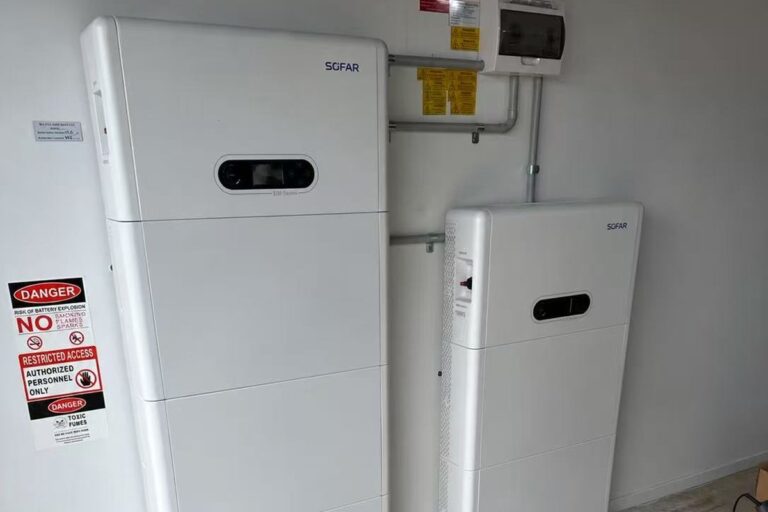
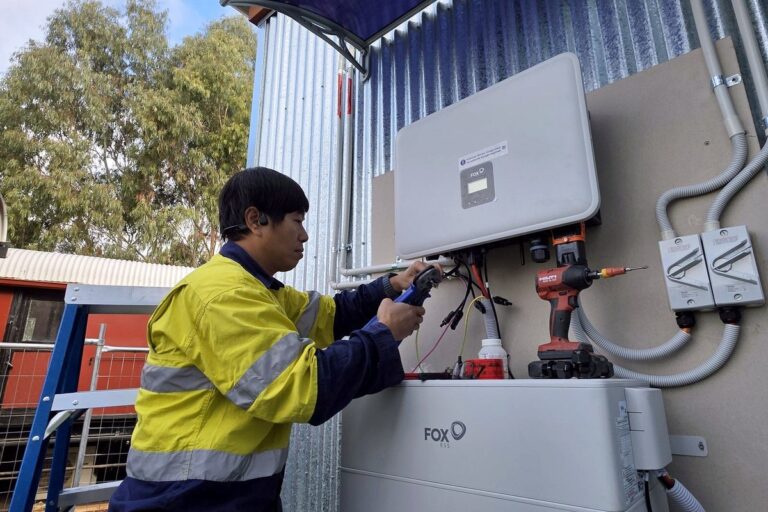
The Sigenergy systems we install put the charger in the stack. The Fox ESS systems we install pair with a separate wallbox. Neither is wrong. The DC path avoids a conversion step, which is worth something; a separate wallbox keeps the two decisions independent, which is also worth something. If an EV is central to the whole purchase, the integrated route is worth a look, and we went through that product in detail in the Sigenergy battery review.
Does the battery rebate cover an EV charger?
No. The federal Cheaper Home Batteries Program is a battery discount.
The Department of Climate Change, Energy, the Environment and Water describes it as a discount of around 30% on the upfront cost of installing small-scale battery systems from 5 kWh to 100 kWh, available for batteries connected to new or existing solar, and calculated on the battery’s usable capacity and the small-scale technology certificates it creates. The discount steps down over time until 2030.
An EV charger is not battery capacity, so it does not attract the discount. Budget for it separately.
Two more conditions from the same page are worth repeating because they decide whether a quote is even eligible: the battery must be accredited by the Clean Energy Council, and the installer must be accredited by Solar Accreditation Australia.
The department also makes a point that sits oddly with how batteries are usually sold, and it is worth quoting: bigger is not always better, and installing a battery that is too large for your solar or your inverter can limit the benefit you get from it. That is the department’s own advice, on the program’s own page. See the Cheaper Home Batteries Program page for the full eligibility rules.
What about charging the house from the car?
Vehicle to home and vehicle to grid, where the car acts as the battery, get asked about constantly.
The regulatory path now exists. AS/NZS 4777.2, the Australian standard covering grid connected inverter systems, has been amended to cover bidirectional EV charging, and bidirectional units have started appearing among Clean Energy Council approved products.
Three things still have to line up before it works at your house. The charger has to be an approved bidirectional unit. Your electricity distributor has to approve the connection, the same as for any inverter energy system. And your particular car has to support it, which most models on Australian roads still do not.
Our honest position: if bidirectional charging is the reason you are buying, wait until you can confirm all three for your own car and your own street. If it is a nice-to-have, buy the system for what it does today and treat the rest as an option.
Three questions to ask before you sign
What is this battery’s maximum discharge output in kW, and what happens when the car asks for more? This tells you whether “charging from the battery” means anything in practice.
Can the charger follow surplus solar, or does it only run at full power? This is what makes daytime charging from the roof actually work.
What is the quote for the battery, and what is the quote for the charger? They should be separate lines, because only one of them attracts the federal discount.
Frequently asked questions
Can a home battery charge an electric car?
Yes. Once installed, the battery supplies your switchboard and an EV charger can draw from it like any other load. The limits are capacity and discharge speed. A car using around 6 kWh a day would take a large share of a typical 10 to 20 kWh home battery every day, and a single phase wallbox drawing about 7 kW is more than many home batteries can deliver on their own, so the grid tends to make up the difference.
Is it better to charge an EV from solar or from a home battery?
From solar, during the day, in almost every case. Daytime solar is the cheapest energy available to you and charging then leaves the battery full for the evening peak, which is when grid prices are highest. Charging the car from the battery at night shifts the house onto the grid in those same expensive hours. To charge from the roof you need a charger that can modulate to match surplus solar rather than running at full power.
Do I need a bigger battery if I have an electric vehicle?
Usually the better first move is more solar, not more battery. An EV is a large new load, and generation is a cheaper way to cover a load than storage. Size the battery against your evening household usage as you otherwise would, then make sure your array and inverter are big enough to charge the car during the day. Note that the federal program’s own guidance warns a battery too large for your solar or inverter can limit the benefit.
Does the Cheaper Home Batteries discount cover an EV charger?
No. The discount is calculated on the battery’s usable capacity and the certificates it creates, for battery systems between 5 kWh and 100 kWh connected to new or existing solar. An EV charger is not battery capacity and does not attract the discount, so it should appear as its own line on your quote. The battery must be Clean Energy Council accredited and the installer accredited by Solar Accreditation Australia for the discount to apply at all.
What is the difference between a DC EV charger in the battery and a normal wallbox?
A separate AC wallbox is a standalone unit that works with any battery, and energy from the battery is converted from DC to AC and back to DC inside the car. A DC charging module built into the battery stack sends DC straight from the battery and panels to the car, skipping a conversion step, but ties you to that brand. The integrated route suits households where the EV is central to the purchase; a separate wallbox keeps the charger and battery decisions independent.
Can my EV power my house in a blackout?
Not yet for most people. The Australian standard for grid connected inverters has been amended to cover bidirectional charging and approved bidirectional units are starting to appear, but three things must line up: an approved bidirectional charger, approval from your electricity distributor, and a vehicle that supports it. Most cars on Australian roads currently do not. A home battery with backup wiring is the reliable way to keep circuits alive during an outage today.
The short version
A home battery can charge your EV, and mostly it should not. Charge the car from the roof in the daytime, keep the battery for the evening, and size the system by looking at your own driving and your own bill rather than a package.
Send us your latest power bill and roughly how many kilometres a week the car does. We will size the system against both, and quote the battery and the charger as separate lines so you can see exactly what the discount applies to.
Sources
DCCEEW, Cheaper Home Batteries Program, for the discount basis, the 5 kWh to 100 kWh range, the accreditation requirements and the guidance on oversizing. Checked 20 August 2026.
Green Vehicle Guide, Australian Government, for official energy consumption figures by model.
AS/NZS 4777.2, Grid connection of energy systems via inverters, for the bidirectional charging provisions.