SOFAR Battery Review 2026: PowerAll Specs, Rebate and Real Installs
What the SOFAR PowerAll is, its specs from SOFAR's datasheet, whether it is approved for the federal battery discount, how much discount each module earns before and after 1 January 2027, and why we install it.
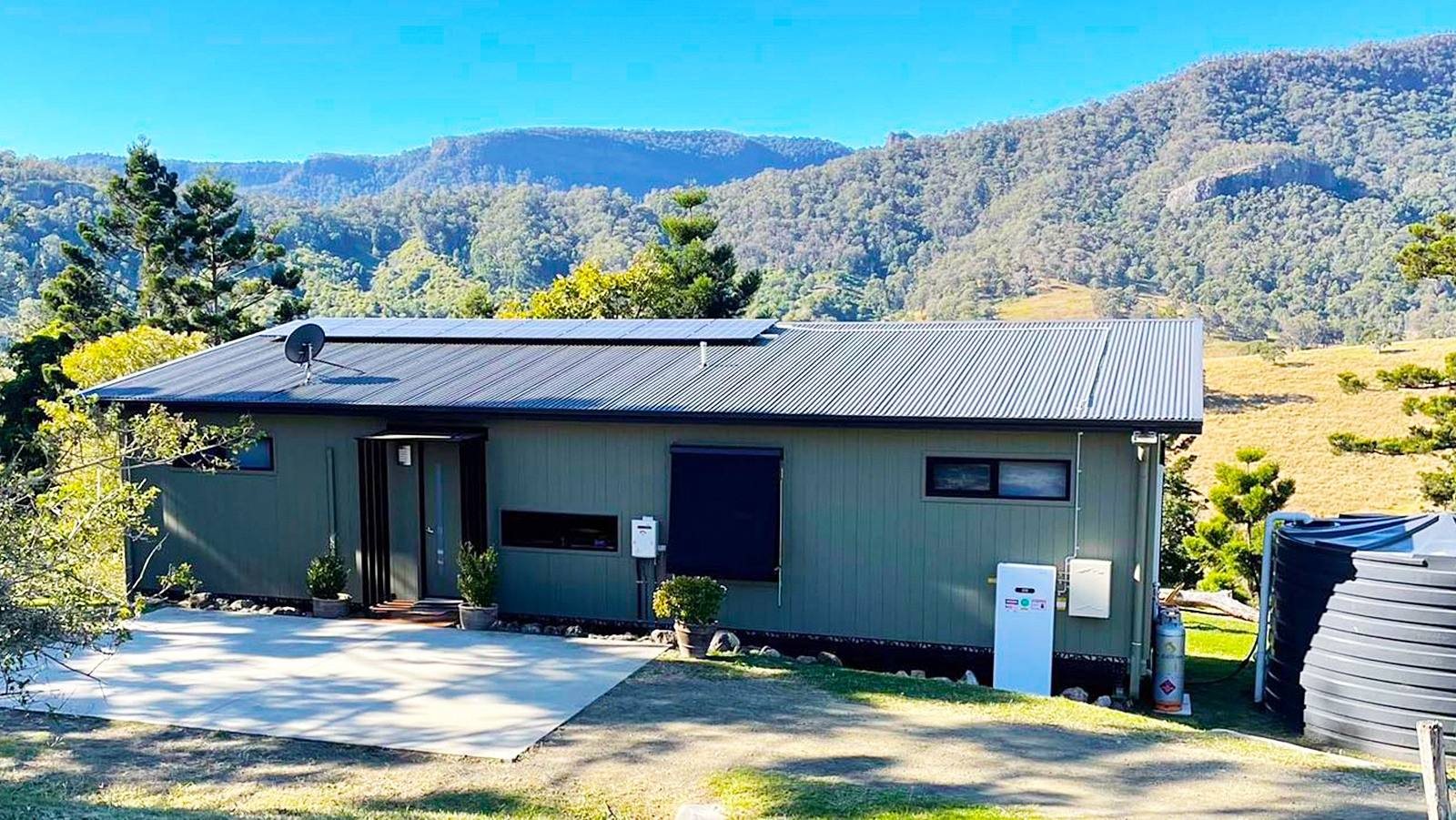
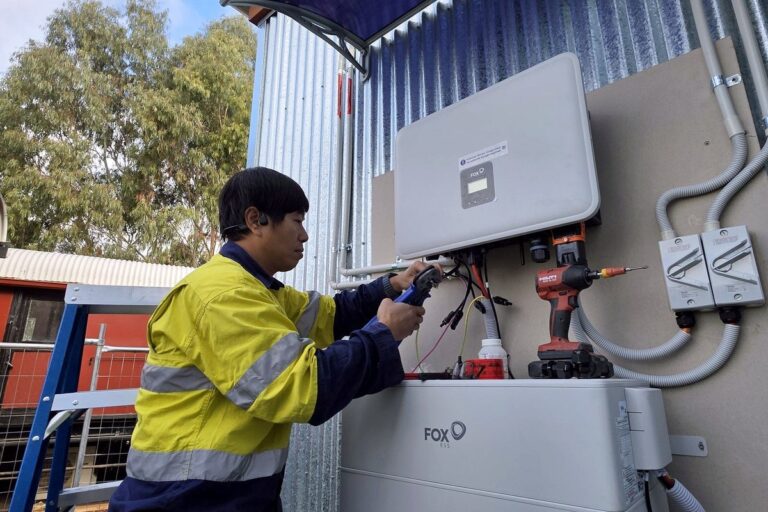
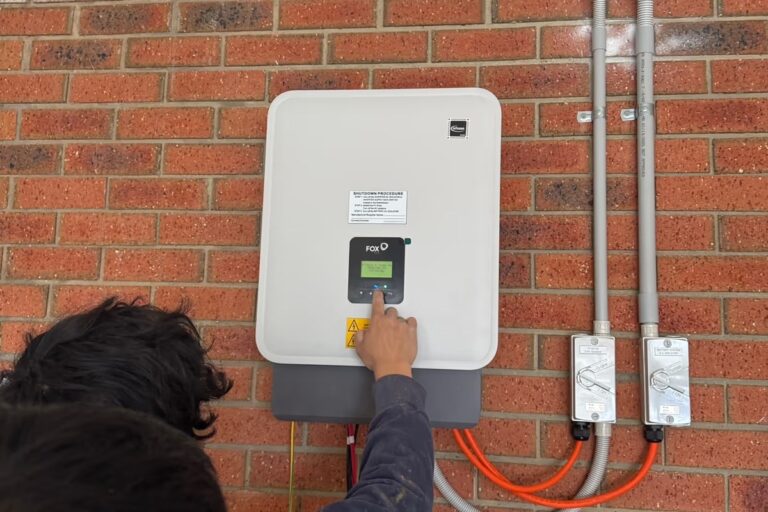
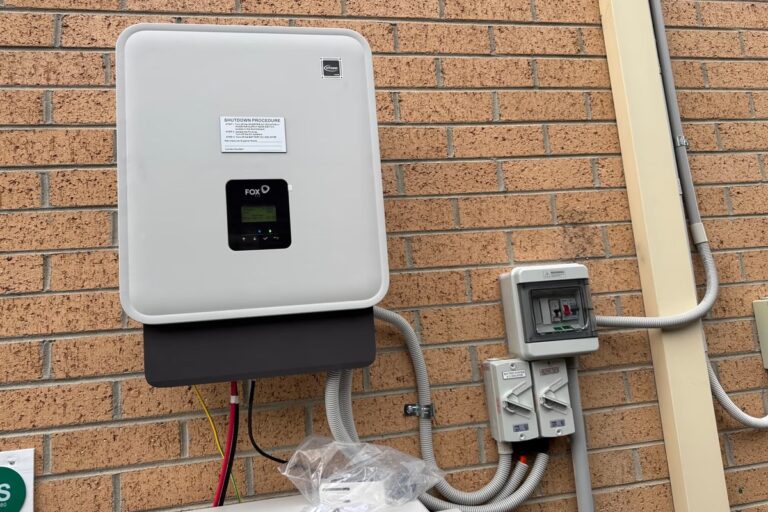
SOFAR is the newest battery brand we install at E3 Energy, next to Fox ESS, and the photos of the garage install in this article are from one of our own jobs. It is a big name in inverters worldwide but a newer name to most Melbourne households, so the first thing people want to know is whether it is any good.
This review answers that with the facts a Melbourne buyer needs: what the SOFAR PowerAll actually is, the specs from SOFAR’s own datasheet, whether it is approved for the federal battery discount, how much discount a SOFAR battery earns before and after 1 January 2027, how it fits on a Melbourne home, and why we chose to install it.
Who is SOFAR?
SOFAR (Shenzhen SOFARSOLAR) was founded in 2013 and is headquartered in Shenzhen. It listed on the Shenzhen Stock Exchange’s ChiNext board in April 2025 and says it has shipped more than 48 GW of inverters into more than 100 countries. BloombergNEF listed it as a Tier 1 energy storage manufacturer for Q2 2026, and Australian research firm SunWiz named it one of the five fastest-growing battery and inverter brands in Australia for 2025.
In Australia, SOFAR runs an office in Sydney’s CBD and opened a new Sydney warehouse with distributor Sunsavers in January 2026. That matters for a battery you will own for ten years or more: warranty claims and replacement parts go through a local team, not an overseas email address.
PowerAll is SOFAR’s single-phase all-in-one home battery. It has two parts that stack on top of each other:
The ESI hybrid inverter on top. It takes power from your solar panels, charges the battery and runs the house. It comes in sizes from 3 kW to 6 kW.
BTS 5K battery modules underneath. Each module holds 5.12 kWh, and you can fit one to six of them, from 5 kWh up to 30 kWh.
Because the modules stack, the battery can grow later. SOFAR’s datasheet says new modules can be mixed with existing ones, so a household that starts at 15 kWh can add more when the kids become teenagers or an EV arrives.
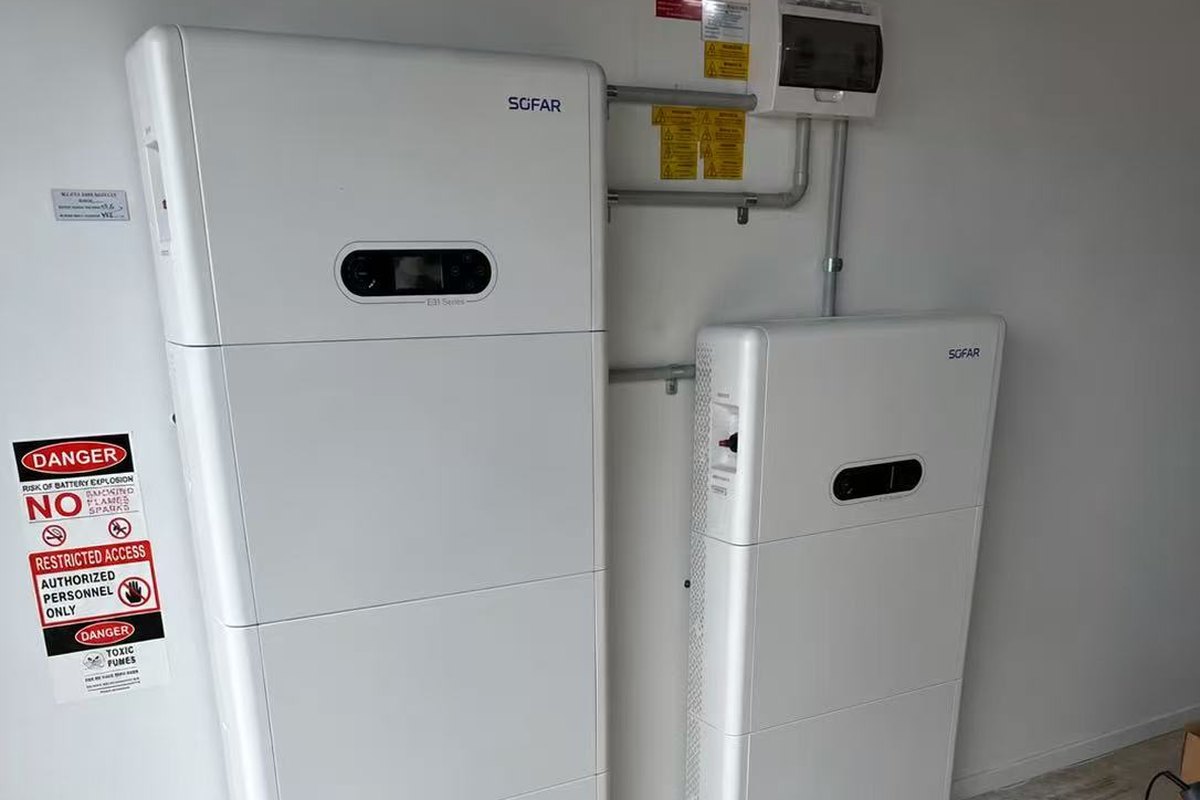
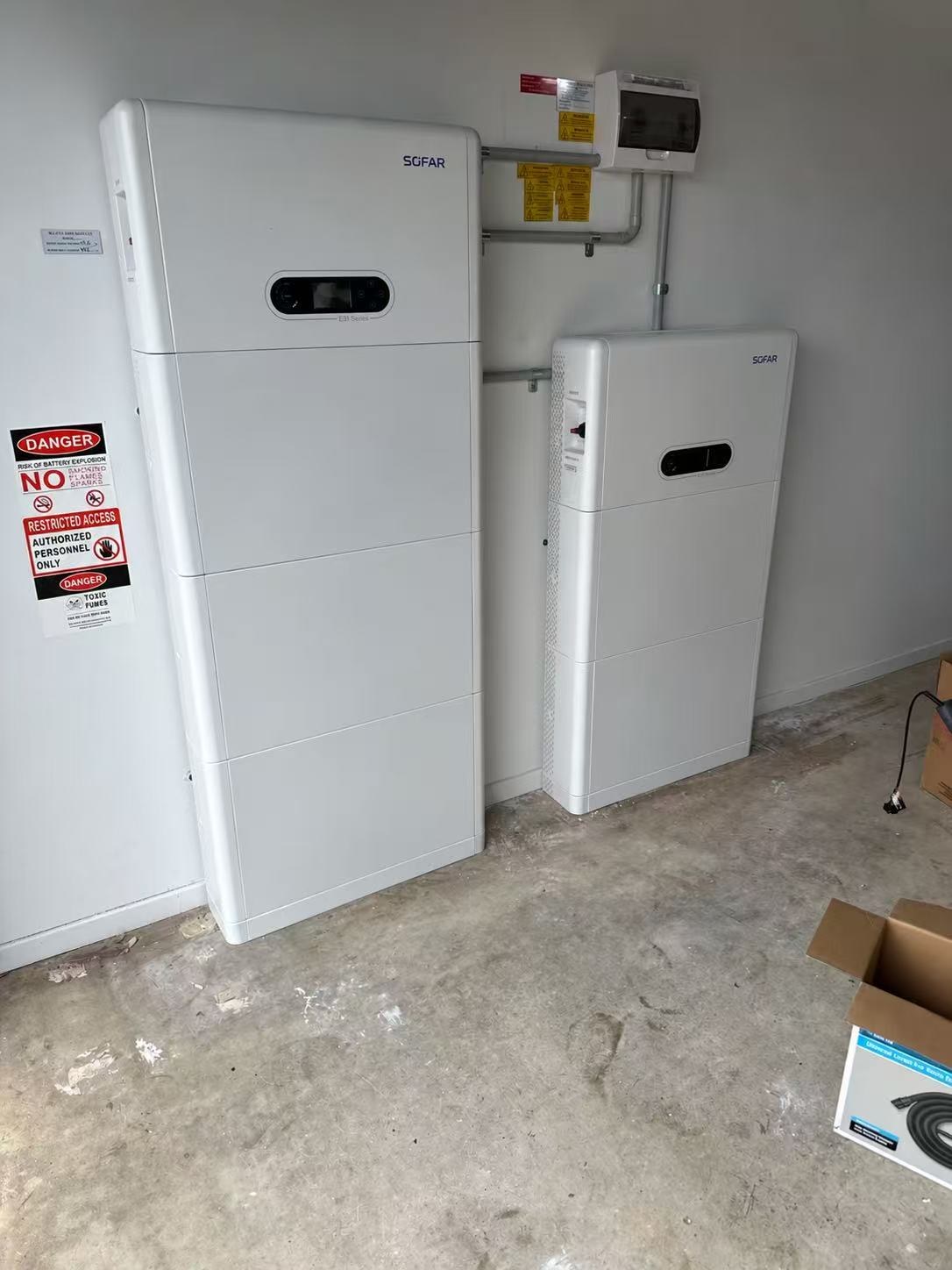
One of our own SOFAR installations. The tall stack carries the ESI inverter and its display. With four or more battery modules, SOFAR’s datasheet shows the system as two stacks side by side.
SOFAR PowerAll specs
These figures come from SOFAR’s PowerAll datasheet (version 2.2, January 2026), except the usable capacity, which is the figure on the Clean Energy Council’s approved battery list.
Specification
SOFAR PowerAll (ESI 3-6K-S1 + BTS 5K)
Battery chemistry
Lithium iron phosphate (LFP)
Energy per module
5.12 kWh total, 4.99 kWh usable (CEC list)
System sizes
1 to 6 modules: 5.12 to 30.72 kWh total
Inverter sizes
3, 3.68, 4, 4.6, 5 or 6 kW, single phase
Solar input
2 MPPTs; up to 12 kW of panels on the 6 kW model
Depth off the wall
170 mm
Width
708 mm
Height, 3 modules (15 kWh)
1,670 mm, one stack
Height, 6 modules (30 kWh)
Two stacks: 1,670 mm and 1,260 mm
Weight, 6 modules
330.5 kg in total
Weather rating
IP65, suitable for outdoor walls
Operating temperature
Charges from 0°C to 50°C, discharges from -10°C to 50°C
Backup output switchover
10 ms (default setting)
Monitoring
LCD screen on the inverter, plus app over Wi-Fi (Ethernet or 4G optional)
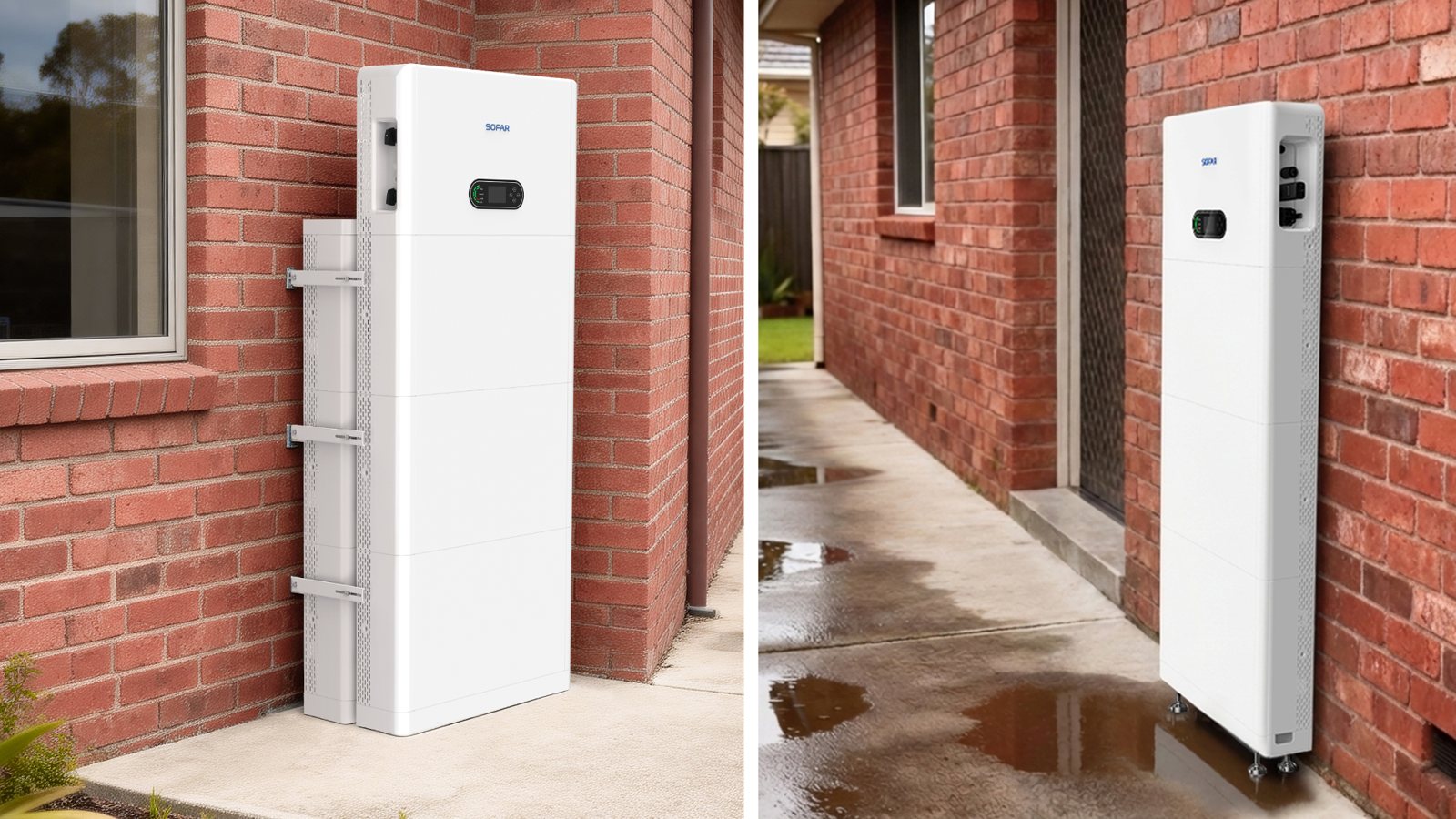
The number most Melbourne homes care about is the 170 mm depth. A slim battery fits down side paths and in single garages where a deeper unit would get in the way of the car or the bins.
SOFAR’s narrow-wall mounting kit (left) and adjustable legs for uneven or wet ground (right), both in stock in Australia since March 2026. Image: SOFAR.
Is SOFAR approved for the federal battery discount?
Yes. To get the Cheaper Home Batteries Program discount, the battery and the inverter must both be on the Clean Energy Council’s approved lists on the day of installation, and the installer must be accredited by Solar Accreditation Australia. The system must also be able to join a virtual power plant (it does not have to join one).
On the current lists:
Battery: the SOFAR BTS 5K module is approved, listed until 31 December 2027, at 4.99 kWh usable. The BTS E5, E10, E15 and E20-DS5 towers used with SOFAR’s three-phase inverters are also listed.
Inverter: the ESI 3K, 3.68K, 4K, 4.6K, 5K and 6K-S1 models are approved, listed until September 2027.
Sources: DCCEEW eligibility information; CEC approved product lists, published through the Clean Energy Regulator (as republished by Why Solar). Approvals change, so we check the exact model numbers again before every install, and they are printed on your quote.
How much discount does a SOFAR battery get?
The discount comes as small-scale technology certificates (STCs). The number of STCs is the battery’s usable capacity multiplied by the STC factor on the installation date. Since 1 May 2026 the factor also tapers with size: the first 14 kWh earns the full factor, each kWh from 14 to 28 earns 60% of it, and each kWh from 28 to 50 earns 15%.
The factor is 6.8 for systems installed from May to December 2026 and drops to 5.7 on 1 January 2027. Here is what that means for each size of PowerAll, using the 4.99 kWh usable figure per module:
PowerAll size
Usable capacity
STCs if installed by 31 Dec 2026
STCs if installed Jan to Jun 2027
2 modules (10 kWh)
9.98 kWh
about 67
about 56
3 modules (15 kWh)
14.97 kWh
about 99
about 83
4 modules (20 kWh)
19.96 kWh
about 119
about 100
5 modules (25 kWh)
24.95 kWh
about 139
about 117
6 modules (30 kWh)
29.94 kWh
about 154
about 129
STCs are worth up to $40 each through the government’s STC Clearing House, and the open-market price can be lower. At $40, a 30 kWh PowerAll earns up to about $6,160 if it is installed by 31 December 2026 and about $5,160 from 1 January 2027: roughly $1,000 less for the same battery, installed a few weeks later. These are our calculations from the official factors; the REC Registry STC calculator gives the exact figure for a given install date.
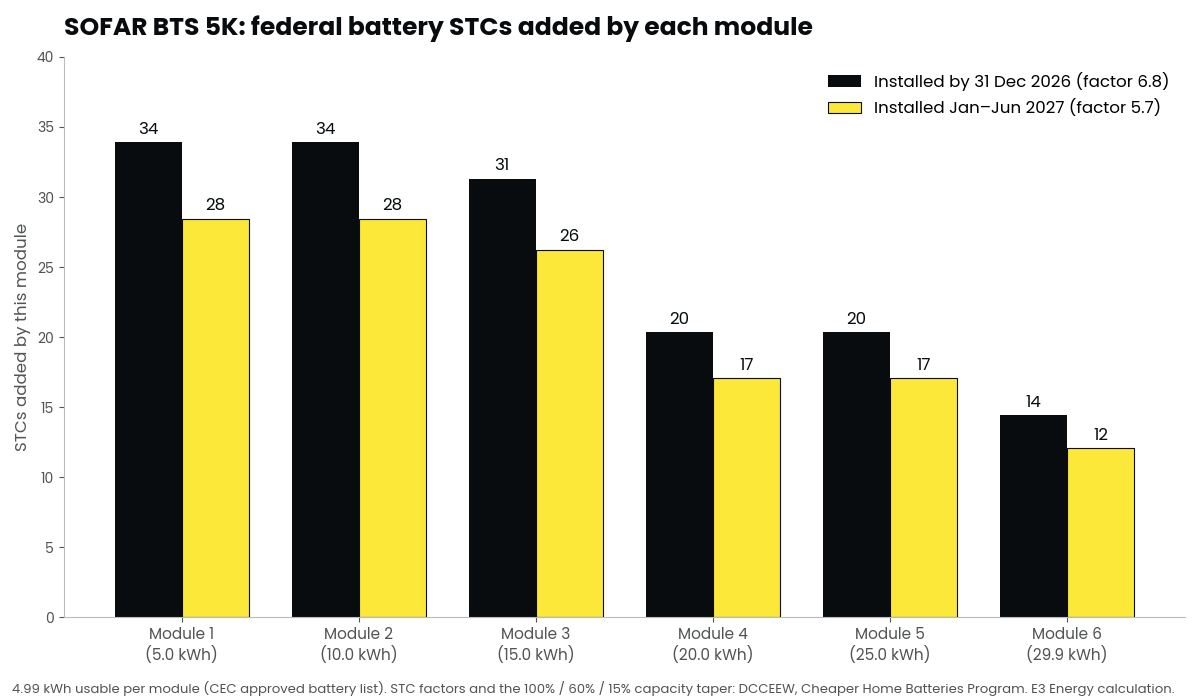
The first three modules earn the most discount. Modules four to six still add capacity, but each earns less because of the taper.
The chart shows the trade-off clearly. The first three modules each bring in about 31 to 34 STCs. The sixth brings in about 14. So the right size depends on how much you actually use in the evening, not on chasing the biggest discount. Our guide to what size battery you need in Victoria walks through that from your bill, and our rebate breakdown for the Fox ESS CQ7 shows the same factor change on a different battery.
In Victoria, Solar Victoria is no longer taking applications for battery loans, and there is no state battery rebate. Solar Victoria’s solar panel rebate is still open, at up to $1,400 for eligible households, and since 1 July 2026 it requires a combined household income of $150,000 or less. Sources: Solar Victoria, battery loans and solar panel rebate.
Where a SOFAR PowerAll fits on a Melbourne home
A 5 kW solar and 15 kWh PowerAll system on an Australian home. Image: SOFAR.
With an IP65 rating, a PowerAll can go on an outside wall, in a garage or under a carport. On site we look for four things:
Shade and heat. The battery charges between 0°C and 50°C. A south or east wall, or a garage, keeps it out of the hottest afternoon sun.
Floor or wall. Stacks sit on a base on the floor or hang on a wall bracket. Six modules weigh 330 kg, so the floor or wall has to take it.
Distance to the switchboard. Shorter cable runs mean a tidier, cheaper install.
Room for two stacks. A 20 to 30 kWh system needs just over 1.4 metres of wall width for two 708 mm stacks side by side, as in the garage photos above.
We added SOFAR to our range because it gives Melbourne households a lot of storage for the money, from a manufacturer with a real Australian support base.
Storage for the money. A 30 kWh PowerAll covers a big household’s evening and overnight use, and with the federal discount it is one of the most affordable ways to get that much capacity.
Slim and weatherproof. At 170 mm deep and IP65, it goes on side paths, in single garages and on outside walls where bulkier batteries will not fit.
Room to grow. Start with the modules you need now and add more later, up to six per system.
Local service. SOFAR’s Australian service standard is a response within 24 hours and a resolution within 7 days, with a replacement decision inside that time if a remote update cannot fix the issue. It runs five local warehouses, so parts are close by.
Industry recognition. BloombergNEF Tier 1 for energy storage (Q2 2026), Wood Mackenzie Grade A manufacturer, and one of SunWiz’s five fastest-growing battery and inverter brands in Australia for 2025.
VPP-capable. Like every battery that earns the federal discount, it can join a virtual power plant if you want to. Our guide to VPPs in Victoria explains what they pay.
The battery modules carry a 10-year warranty, and the full terms are on the SOFAR warranty document we include with your quote. Sources: SOFAR, service standard, SOFAR, May 2026, SunWiz.
What’s new from SOFAR in 2026
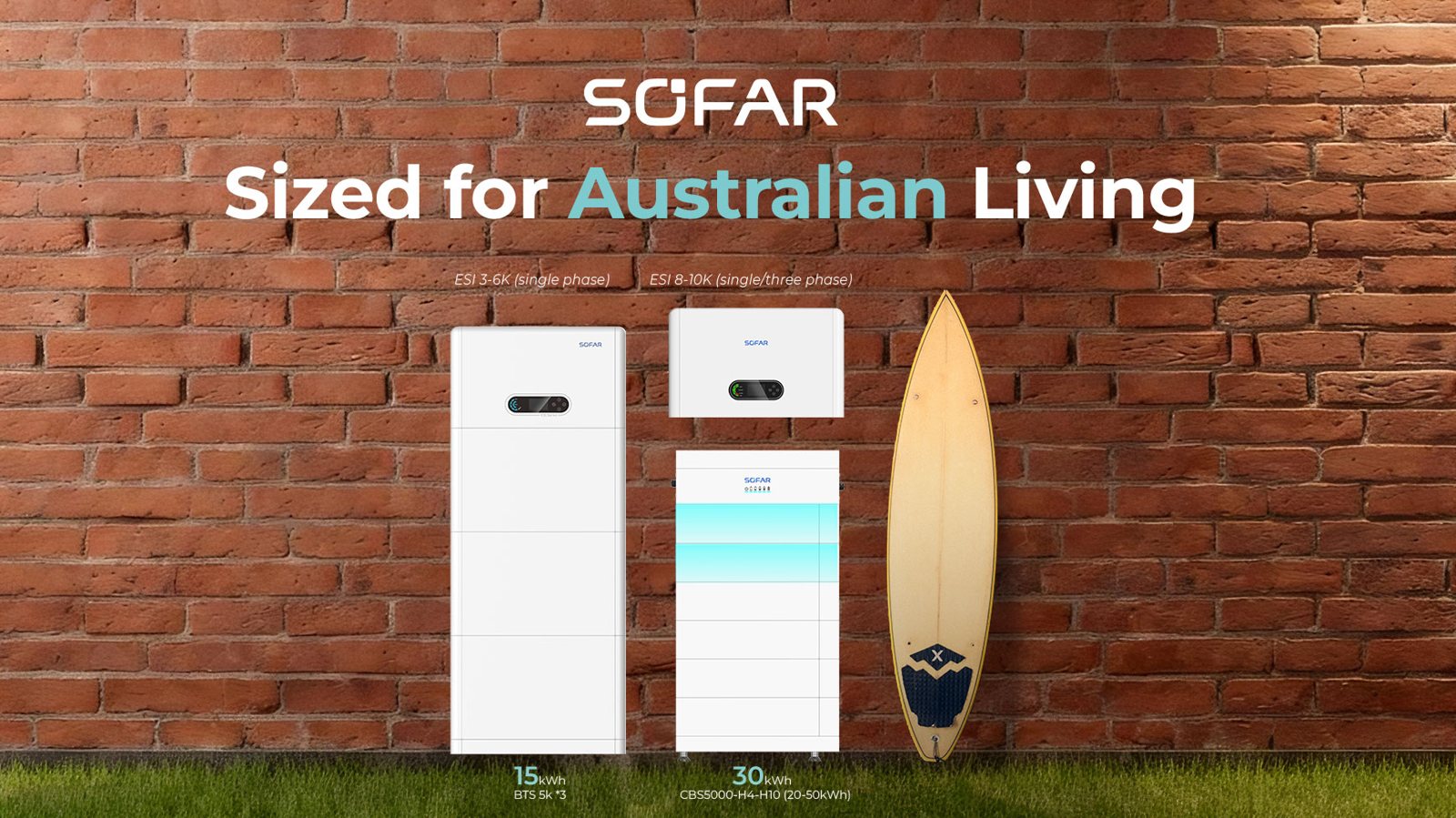
The current PowerAll (left) and SOFAR’s new ESI 8-12K inverter with the CBS5000 battery (right). Image: SOFAR.
At the Smart Energy Conference in Sydney in May 2026, SOFAR launched a new single-phase system: the ESI 8-12K-S1 inverter with the CBS5000 battery. The modules click together without cables between them, which SOFAR calls “Stack & Go”, and a 30 kWh stack is 117 cm tall, much shorter than a 30 kWh PowerAll.
The new inverters (ESI-8K-S1, ESI-9.99K-S1-A and ESI-12K-S1) were added to the CEC approved inverter list in October 2026. The PowerAll with BTS 5K modules is the SOFAR battery on the approved battery list today, so it is the system we install with the federal discount. We will add the CBS5000 to this article when it joins the list.
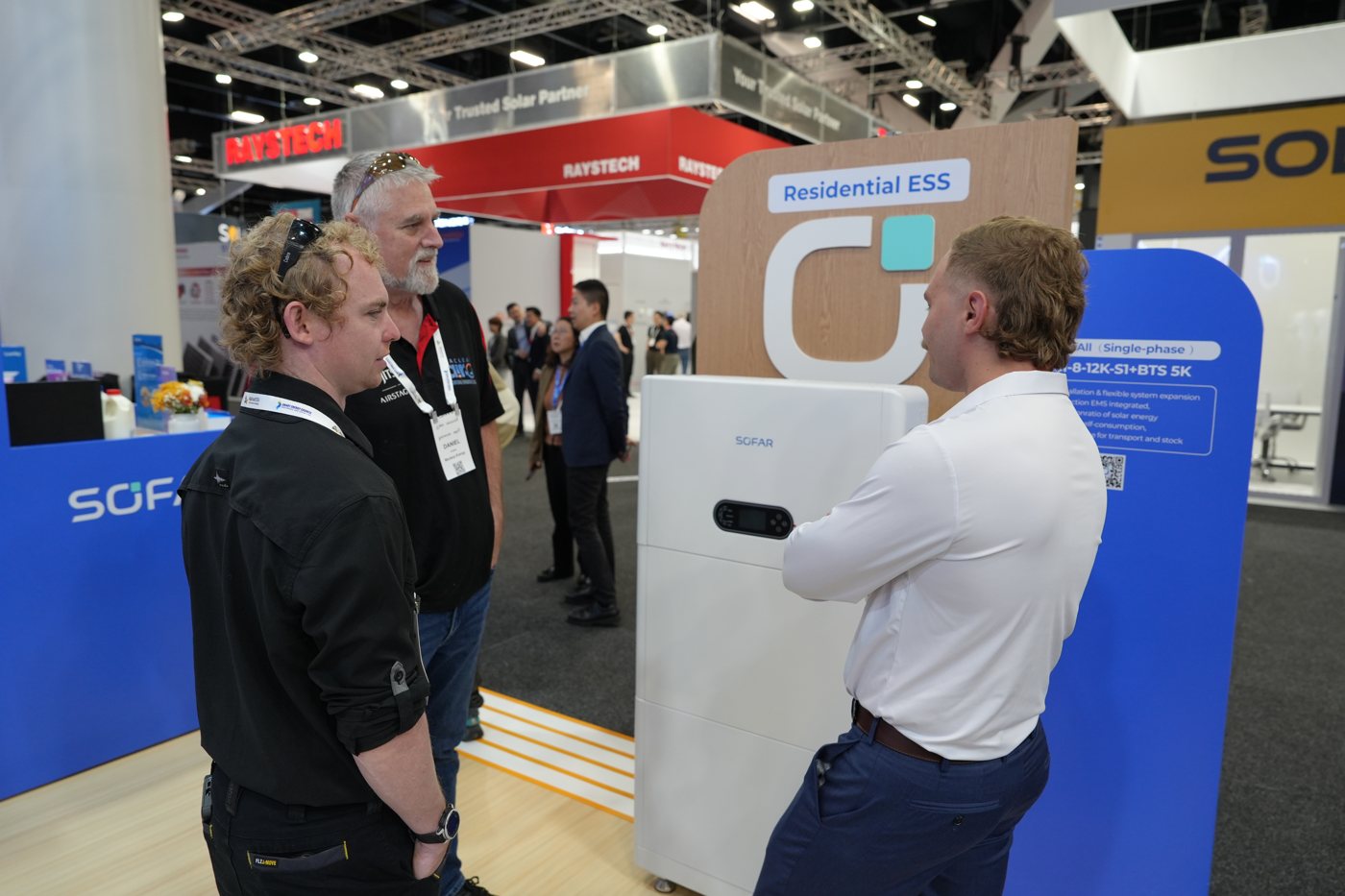
SOFAR’s stand at Smart Energy 2026 in Sydney, where the CBS5000 range launched. Image: SOFAR.
For October, we are offering a SOFAR package with 6.6 kW of solar panels and a 30 kWh SOFAR battery for $4,099 for eligible customers, after the applicable rebates and STC discounts. Eligibility depends on your home and the rebate rules, so we check that first and then send a written quote with the exact model numbers on it.