Virtual Power Plants in Victoria: Should Your Home Battery Join One?
You do not have to join a virtual power plant to get the federal battery discount. Here is what AGL, Origin and Amber pay in Victoria, which VPPs work with Fox ESS and Sigenergy, and what a VPP is worth next to your battery's everyday job.
A virtual power plant, or VPP, is a network of home batteries that an electricity retailer can charge and discharge together when the grid needs help. You keep the battery and use it every day as normal. A few times a year, on a hot evening or when wholesale prices spike, the retailer borrows some of your stored energy and pays you a bill credit for it.
Most Victorians shopping for a battery this spring will be asked about one. Retailers are offering welcome credits, battery plans and app automation, and the federal battery discount now requires every grid-connected battery to be capable of joining a VPP. That last point causes a lot of confusion, so it is the first thing this guide settles.
Below we compare the three VPP offers most relevant to Melbourne households, check which of them work with the two battery brands we install, Fox ESS and Sigenergy, and work out what a VPP is actually worth next to the battery’s everyday job. Every offer and compatibility detail comes from the retailer’s or manufacturer’s own published page, checked on 7 October 2026.
A virtual power plant links many homes like these into one controllable resource. Each battery stays in its own garage or on its own wall. Photo: Kindel Media, Pexels.
Do you have to join a VPP to get the battery discount?
No. This is the most common misunderstanding we hear on quotes.
The Clean Energy Regulator’s guidance for the Cheaper Home Batteries Program says owners are not required to join a VPP. What the program requires is that the battery is technically capable of participating in one if it is grid connected. A battery that meets that rule earns the full discount whether you ever sign up or not.
So the VPP question is a separate decision you can make on the day of installation, a year later, or never. The discount itself is set by the STC Factor on your installation date, which is 6.8 for May to December 2026. Our Victorian battery rebate guide covers how that turns into dollars.
What a VPP does with your battery
When you join, you give the retailer permission to control the battery during events. An event can mean three things:
Discharge: the battery exports stored energy to the grid, usually on a hot evening when demand peaks.
Charge: the battery charges from the grid when there is surplus power and prices are low.
Hold: the battery keeps its charge in reserve ahead of an expected peak.
Outside events, the battery runs as it normally would, storing your daytime solar and covering your evening use. Each retailer sets limits on how often and how hard it can use your battery, and how much charge it must leave behind. Those limits are where the offers differ most.
Three VPP offers open to Victorian households, side by side
These are the published terms on each company’s site as at 7 October 2026. All three require you to buy your electricity from that company.
AGL Virtual Power Plant
Origin Battery Lite (Origin Loop)
Amber for Batteries (SmartShift)
How you are paid
$200 welcome credit, $20 bill credit every quarter, plus $1 per kWh your battery charges or discharges during VPP events
$200 sign-on credit, plus $1 per kWh exported during Origin Loop events
Wholesale prices passed through. SmartShift charges and sells around them automatically
Limits
Battery used for no more than 250 kWh a year in total
Event credits on up to 200 kWh a year
No event cap. Your result depends on wholesale prices
Charge left in your battery
Up to 20% reserve, depending on battery brand
Not stated on the plan page
Set within the app
Cost to join
Needs an AGL electricity plan
Add-on to any eligible Origin plan, except Origin Battery Charge
$25 a month membership
Headline value
See the worked example below
Origin quotes up to $400 in the first year, including the sign-on credit
Varies with the market
AGL and Origin pay a fixed rate per event and cap how much they use your battery. Amber works differently: you are on wholesale prices all the time, and its software trades your battery against them. That can earn more in a volatile summer and less in a quiet one, and it means your grid prices move with the market too.
Which VPPs work with Fox ESS and Sigenergy
A VPP only works if the retailer’s software can talk to your inverter and battery. Compatibility is set model by model, not brand by brand, and it changes often. Here is what each company publishes for the two brands we install.
Fox ESS
Sigenergy
AGL VPP
Not on AGL’s compatible list
Listed. SigenStor BAT 5.0 and BAT 8.0 battery modules with a range of SigenStor energy controllers, 20% reserve
Origin Loop
Yes. Fox ESS announced the Origin integration in February 2026 for customers in parts of Australia
Check Origin’s current eligibility list
Amber SmartShift
Open beta for three inverter families: H1-G2, KH and H3-Smart. H3-Pro is not taking registrations yet
Any Sigenergy system that includes a Sigen Gateway or Sigen Sensor
Two details here change real decisions.
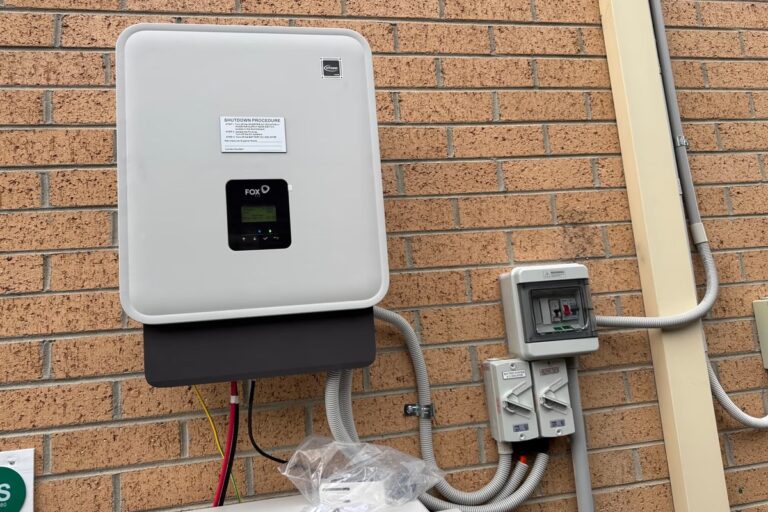
For Fox ESS owners, the inverter decides it. Amber’s list names inverter families, not batteries. A Fox ESS CQ7 battery is enrolled through the inverter it is paired with, so the model printed on your quote matters more than the battery name. If you want to keep the Amber option open, check that inverter against Amber’s list before you sign.
For Sigenergy owners, the module size matters at AGL. AGL’s table lists the BAT 5.0 and BAT 8.0 modules. The newer BAT 6.0 and BAT 10.0 modules were not on it when we checked. Our Sigenergy battery review explains the differences between those modules.
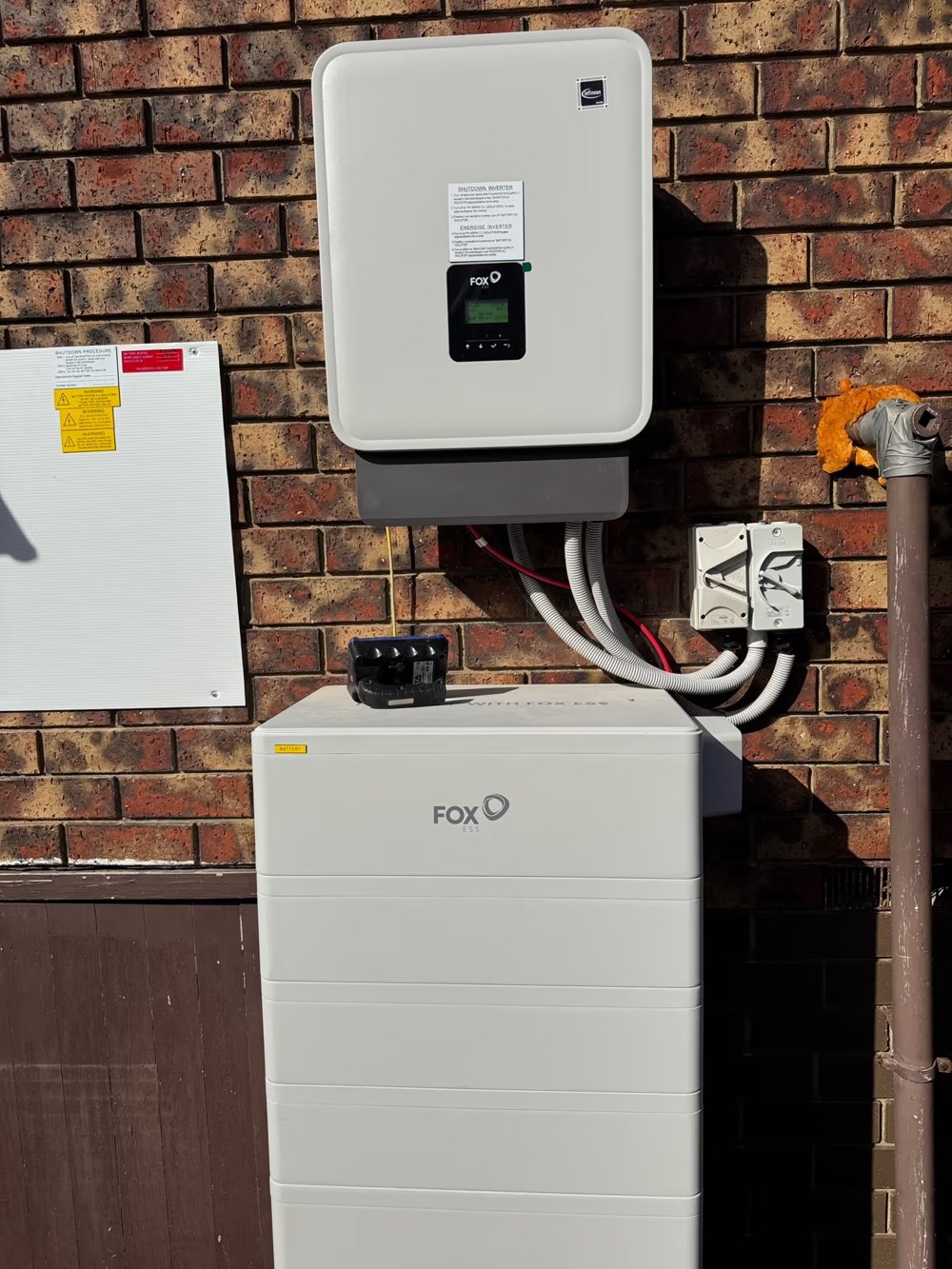
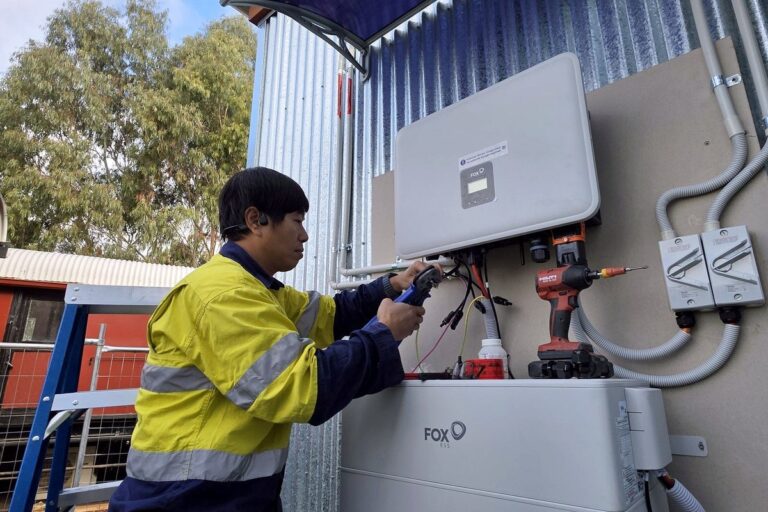
A Fox ESS install on one of our Melbourne jobs. For VPP purposes the inverter on the wall above the battery is the part the retailer’s software connects to.
What a VPP is actually worth
AGL publishes its own worked example. Your battery exports 10 kWh during an event and earns $10 in credits. Because that energy left the house, you buy an extra 10 kWh from the grid later, which at 40 cents per kWh costs $4. You come out $6 ahead on that event.
Scaled up to a full year, using AGL’s published terms:
$200 welcome credit in the first year
$80 a year in quarterly credits
up to $250 a year in event credits, because the battery is used for no more than 250 kWh
That is a ceiling of about $530 in gross credits in the first year and $330 a year after that, before you subtract the extra grid energy you buy back. Most homes will not hit the 250 kWh limit every year, because it depends on how many events the grid needs. Origin’s equivalent ceiling is $400 in the first year and $200 a year after that.
Now compare that to what the battery does every other night of the year. A battery that covers 10 kWh of your evening use each night moves about 3,650 kWh a year. AGL’s cap of 250 kWh is less than 7% of that. On the Victorian Midday Power Saver tariffs, an evening kWh costs between 39.75 and 49.82 cents depending on your distribution zone, so the everyday job of covering your own evening is where most of a battery’s value sits.
A VPP is a top-up on a battery that already makes sense for your bills. It rarely turns a battery that does not suit your home into one that does. If you are still working out whether yours does, start with our guide to whether a home battery is worth it in Victoria.
Annual figures are our arithmetic from AGL’s and Origin’s published terms. The 10 kWh a night example is illustrative, not a figure for any particular home.
The trade-offs to check before you join
Control of your battery
During an event, the retailer decides what the battery does. Amber’s Sigenergy guide is explicit: once enrolled, the system’s operating mode is locked to VPP mode, and changing it yourself stops the automation. Amber also notes that a Sigenergy EV charger cannot have vehicle-to-grid enabled while the battery is in its VPP.
Backup power on the nights you want it
Events tend to fall on hot evenings, which is also when a storm is most likely to knock the power out. AGL commits to leaving up to a 20% reserve. If backup matters to you, ask how much charge the retailer guarantees to leave, and whether your battery’s own storm protection feature overrides the VPP. Sigenergy’s Storm Watch does, according to Amber’s guide. Our blackout backup guide covers what a battery can and cannot run during an outage.
Your battery warranty
AGL’s own page says each manufacturer’s warranty treats VPP participation differently and tells customers to read theirs. Many warranties are limited by total energy throughput as well as years. Sigenergy’s Australian warranty, for example, covers a BAT 8.0 module to 29.64 MWh of throughput. Ten years at AGL’s 250 kWh cap adds 2.5 MWh, about 8% of that, so the effect is modest. It is still worth confirming in writing for your own model.
Your electricity plan
Every VPP in this guide requires you to switch your electricity to that retailer, so compare the whole plan, not the VPP credit on its own. Origin Battery Lite, for example, cannot be added to the Origin Battery Charge plan. If you are also weighing the Victorian Government’s free midday window, our Midday Power Saver guide works through those tariffs, and our feed-in tariff guide covers what your exports are worth without a VPP.
Who a VPP suits
Likely a good fit:
You are already happy with that retailer’s plan, so the VPP credits are a genuine extra.
Your battery is sized well above your evening use, so lending some of it out a few times a year costs you little.
You want automation and do not plan to tune the battery yourself.
Worth a second look:
Backup during outages is a main reason you are buying the battery.
You want to use an EV charger with vehicle-to-grid features on the same system.
The retailer’s plan has higher usage rates than the plan you are on now, which can cancel out the credits.
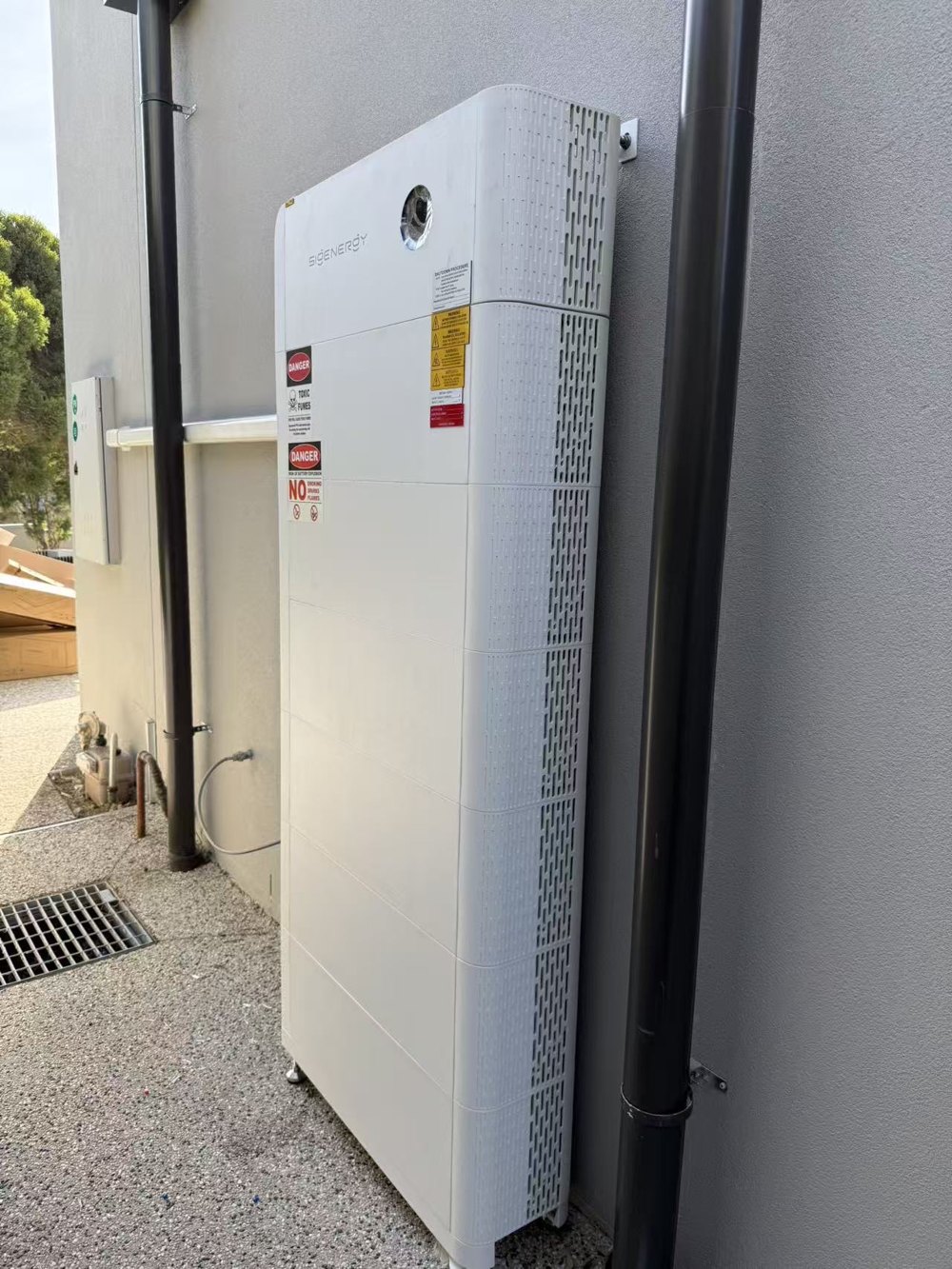
A Sigenergy SigenStor on one of our installs. Whether it can join a given VPP depends on the gateway or sensor fitted and the battery modules in the stack.
How we handle VPPs on a quote
We install both Fox ESS and Sigenergy, so we do not have a reason to steer you to one retailer’s VPP. On every quote we write the exact inverter and battery models, so you can check them against any retailer’s compatibility list yourself. If you think you may join a VPP later, tell us at the assessment and we will confirm the parts needed for the program you have in mind, such as a Sigen Gateway or Sensor, and set the system’s export limit correctly at commissioning so enrolment is not held up.
You do not have to decide on day one. The battery qualifies for the federal discount either way, and you can join a VPP once you have seen a few months of your own usage.
Frequently asked questions
Do I need to join a virtual power plant to get the federal battery rebate?
No. The Clean Energy Regulator says owners are not required to join a VPP. The battery must be technically capable of participating in a VPP if it is grid connected, but you can claim the full Cheaper Home Batteries discount without signing up to one.
How much does a VPP pay in Victoria?
It depends on the retailer. AGL’s VPP pays a $200 welcome credit, $20 a quarter and $1 per kWh the battery charges or discharges during events, with a 250 kWh yearly limit. Origin Battery Lite pays a $200 sign-on credit and $1 per kWh exported during events, up to 200 kWh a year. Amber passes through wholesale prices for a $25 monthly membership.
Can a Fox ESS battery join a VPP?
Yes, depending on the inverter. Fox ESS announced compatibility with Origin Loop in February 2026. Amber’s SmartShift supports Fox ESS H1-G2, KH and H3-Smart inverters in open beta. Fox ESS was not on AGL’s VPP compatibility list as at 7 October 2026.
Can a Sigenergy battery join a VPP?
Yes. Amber supports any Sigenergy system with a Sigen Gateway or Sigen Sensor. AGL lists the SigenStor BAT 5.0 and BAT 8.0 battery modules with a range of SigenStor energy controllers.
Will a VPP drain my battery before a blackout?
Retailers leave a reserve. AGL commits to leaving up to 20% of charge, depending on the battery brand. Some batteries also have their own storm features: Sigenergy’s Storm Watch charges the battery to 100% before forecast severe weather and overrides the VPP while it is active.
Can I leave a VPP later?
Check the terms of the specific offer before you join. AGL calculates event credits across the year and pays them at the end of each 12-month period or contract, so ask what happens to unpaid credits if you switch retailer part way through.
Want a second opinion on a VPP offer?
Send us the offer and a recent bill. We will check whether your battery and inverter are on that retailer’s list, how much of your evening the battery covers today, and whether the credits outweigh any change in your usage rates. If you are still choosing a battery, we will size it to your bills first and keep the VPP options open.
All retailer and manufacturer pages checked on 7 October 2026. VPP terms and compatibility lists change often, so confirm the current terms with the retailer before you sign up. Annual values are E3 Energy calculations from published terms and are not a savings estimate for any particular home.