How Much Does a Home Battery Cost in Melbourne? (2026 Installed Prices)
Real installed battery prices for Melbourne in 2026: what the national averages say, what the federal rebate has already taken off, the six things that move a quote by thousands, and what we charge.
Two Melbourne households can ask for the same thing, a 14 kWh home battery installed, and get quotes thousands of dollars apart. Both quotes can be honest. The national average for that size, with its own inverter, is $13,698 installed after the federal rebate, according to Solar Choice’s Battery Price Index for May 2026. Our own standard package at that capacity starts at $5,299. This guide explains what sits between numbers like those, so you can read your own quote and know which parts are the battery and which parts are your house.
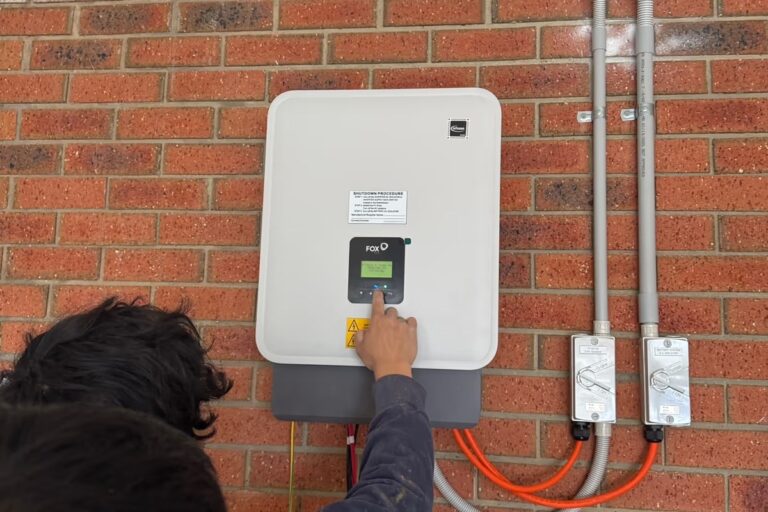
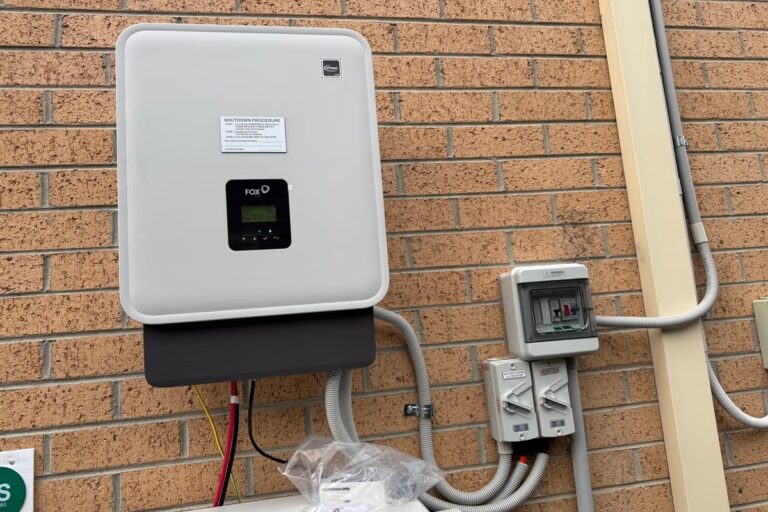
A Fox ESS hybrid inverter on one of our Melbourne installs. The isolators, conduit and shutdown labelling to the right of it are part of every compliant job, and part of every price.
What Australians actually paid in 2026
Solar Choice publishes a quarterly Battery Price Index built from its network of more than 400 installers. Its May 2026 figures include installation, GST and the federal battery rebate, so they are close to what lands on an invoice. Two columns matter, because they answer two different questions: whether your existing solar inverter can already run a battery, or whether the battery needs to bring its own.
Usable capacity
Battery only
Battery + inverter
5 kWh
$5,642
$7,742
10 kWh
$9,084
$10,784
14 kWh
$11,738
$13,698
20 kWh
$16,172
$18,372
Source: Solar Choice Battery Storage Price Index, May 2026. Prices include installation, GST and the federal battery rebate.
SolarQuotes, updating its battery cost guide on 12 May 2026, puts the usual span at roughly $4,000 to $13,000 or more depending on size and brand, again with the federal rebate already applied. The two sources describe the same market from different angles and agree on the shape of it.
One pattern in that table is worth carrying into your own comparison. Cost per kilowatt-hour falls as capacity rises. At 5 kWh the battery-only average works out to $1,128 per kWh; at 20 kWh it is $809. Much of an installation is fixed labour and hardware that does not care how many modules are in the stack, so a small battery carries all of it on very few kilowatt-hours. This is why quoting a battery purely as a dollar figure hides more than it shows.
What the federal rebate has already taken off
Every price above is a post-rebate price. The federal Cheaper Home Batteries Program pays as a point-of-sale discount applied by your accredited installer, so you never see the gross number unless you ask for it. Since 1 May 2026 it has paid on a tiered, per-usable-kilowatt-hour basis:
Usable capacity
Approximate rebate per kWh (2026)
First 14 kWh
~$270
14 to 28 kWh
~$162
28 to 50 kWh
~$40
Above 50 kWh
Not eligible
Rates derive from current DCCEEW small-scale technology certificate settings and move with them. DCCEEW describes the overall effect as a discount of around 30%. It is claimed once per property, and there is no separate Victorian battery rebate running alongside it in 2026. We cover eligibility and the paperwork in our Victorian home battery rebate guide.
Notice where the top tier stops. The rebate pays its highest rate on the first 14 kWh and then drops by about 40%. A household that stretches from 14 kWh to 20 kWh pays close to full retail for those extra six kilowatt-hours, which is a good reason to size the battery to your bills before shopping on price.
Why two quotes for the same capacity land thousands apart
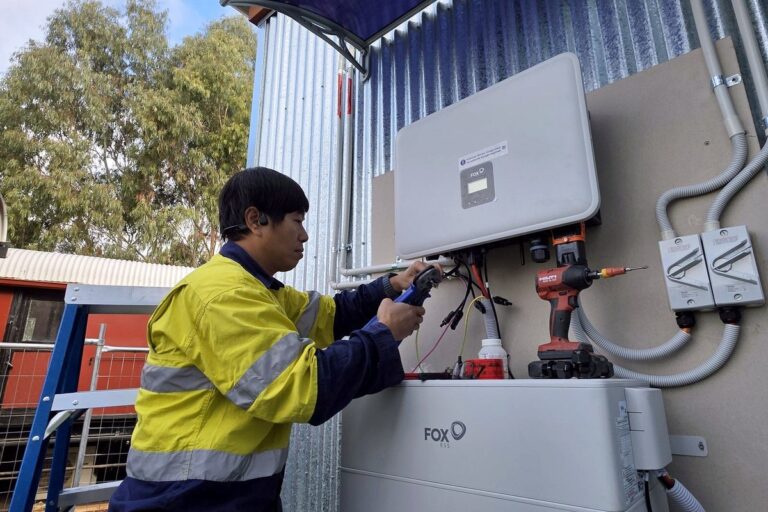
The same install from closer in. Conduit runs, isolators and the mounting work are where two quotes for the same battery usually separate.
Six things move the number, and only the first is about the battery itself.
Whether an inverter is in the price. In the May 2026 averages, a 14 kWh battery with its own inverter costs $1,960 more than the battery alone. If your existing solar inverter is already hybrid or battery-ready, you may not need a second one. If it is not, that cost is unavoidable and should appear on the quote as its own line.
Brand tier. Premium names carry a premium, and the network averages blend them with value-tier lithium iron phosphate systems. A quote well under the average is not automatically suspect, and a quote well over it is not automatically better hardware. Ask what warranty and usable capacity you are getting for the difference.
Your switchboard. Older Melbourne switchboards often need work before anything can be connected. That is real electrical work at real cost, and a quote that ignores it has just moved the cost to a later invoice.
Meter and network approval. Solar Choice notes its averages do not ordinarily include meter installation fees. Depending on your meter and distributor, this is a genuine extra.
Backup scope. Keeping a few circuits alive during an outage costs less than keeping the whole house alive. This single decision can move a quote by thousands, and it is the item most often left vague.
Site difficulty. Long cable runs, a double-storey wall, a meter box on the opposite side of the house. None of it is exotic, all of it is labour.
When you compare quotes, compare these six lines rather than the totals. Two installers can agree on the hardware and still be $4,000 apart because one of them has priced your switchboard and the other has not looked at it.
What we charge, in the open
A CQ7 stack going in. The tower and its inverter sit outside against the wall, and existing rooftop solar stays exactly as it is.
Our standard package is the Fox ESS CQ7 at 14.04 kWh with its own 8 kW hybrid inverter, from $5,299 installed for eligible homes, with the federal rebate already reflected. Until 31 August 2026 we are running a promotional block of ten systems in total across four configurations:
Package
Promotional price, installed
CQ7 14 kWh + 8 kW hybrid inverter
$3,999
CQ7 28 kWh + 8 kW hybrid inverter
$4,999
CQ7 14 kWh + 6.6 kW solar
$4,699
CQ7 28 kWh + 6.6 kW solar
$5,699
Ten systems in total across all four packages, ending 31 August 2026. Standard installation included. Final price depends on your site, switchboard, meter, network approval and backup scope, and is confirmed in writing before anything is booked.
Those figures sit well below the national averages further up this page, so it is fair to ask why. Three reasons, none of them mysterious. The CQ7 is a value-tier LFP system rather than a premium brand, and the averages include the premium brands. We install this one product line repeatedly across Melbourne, which takes time out of every job. And the promotional block is capped at ten systems for a reason: it is a promotion, not our permanent pricing. Compare it against a like-for-like value-tier quote rather than against a premium system, and the gap narrows to something ordinary.
What the price does not decide for you is whether the battery is worth buying at all. That depends on your usage pattern and tariff, which we work through separately in is a home battery worth it in Victoria.
How to read the quote in front of you
Commissioning at handover. The install is finished when the system has been tested and the household has been shown how it runs.
Before you sign anything, check that the quote answers these seven questions in writing.
Is the capacity quoted usable or nominal? Usable is the number that matters, and it is the number the rebate pays on.
Is an inverter included, and is it hybrid?
Has the federal rebate already been deducted, and does the quote state the amount?
What happens in a blackout: nothing, selected circuits, or the whole house?
Is switchboard work included, excluded, or listed as a provisional sum?
Who handles network approval and meter changes, and are those fees in the price?
What is the warranty term, and what throughput or retained-capacity figure comes with it?
A quote that answers all seven can be compared with another quote that answers all seven. Anything less is a price without a scope.
Getting a number for your house
E3 Energy is a Melbourne-based installer with more than 500 installations completed, a NETCC-approved seller and a Solar Victoria authorised retailer. We install both Fox ESS and Sigenergy, so when we point a household at one of them, we are choosing between two lines we actually sell.
Send us your latest power bill and we will model your household against a real system and put the price in writing, including the parts of your site that move it. Call 1300 254 507 or request a price through the website.