Most battery pages tell you what a battery does. Very few tell you what happens at your house on the day, who has to approve what, and which parts of your own property decide the final number on the quote.
We install these every week across Melbourne. Here is the whole sequence, including the parts that add cost and the parts that catch people out.
The three things on your property that set the price
A battery quote is not one number for one product. It is a product price plus whatever your house needs to accept it. Three things do most of the moving.
Your switchboard. Battery systems need dedicated protection and isolation. Older boards, especially ones with ceramic fuses or no residual current device, usually need an upgrade before anything else can be connected. This is the single most common reason a quote moves after a site check.
Your meter. A battery changes how energy flows in both directions. Depending on the meter you have and which distributor you are on, a reconfiguration or a meter change may be required, and that is arranged through your electricity retailer rather than by us.
Backup scope. Keeping the whole house running through an outage is a different job from keeping a few circuits alive. Whole-home backup needs more wiring, sometimes a changeover device, and it is worth deciding early because it changes the labour.
None of this is unique to us. Any installer faces the same three variables. The difference is whether you hear about them before or after you sign.
Before install day: the approval nobody mentions
You cannot bolt a battery to a wall and switch it on. Victoria has five electricity distributors, and the one that owns the poles and wires in your street has to approve the connection of any inverter energy system before it energises. That application goes in before installation, not after.
For a standard residential retrofit this is routine paperwork and we handle it. It matters to you for one reason: it is the step that decides your start date. If someone quotes you an install date without mentioning a connection approval, ask when the application goes in.
Battery installations also have their own Australian Standard, AS/NZS 5139, which covers where a battery can and cannot be located, clearances, and protection. In practice this is what rules out certain spots people ask for, like inside a bedroom wall or a cupboard with no ventilation.
https://e3energy.com.au/wp-content/uploads/2026/08/e3-battery-inverter-commissioning-melbourne.jpg
Install day, in order
A straightforward retrofit is a one day job for a two person crew. Here is the shape of it.
Isolate and make safe. Solar comes off, the board is isolated, and the working area is set up. Nothing goes on a wall until the site is dead and tested.
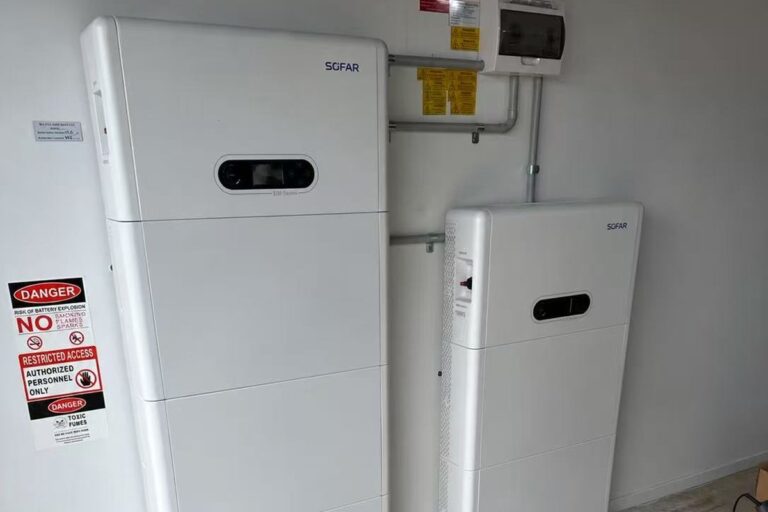
Mount the battery and inverter. The battery tower sits on a level surface against a suitable wall, usually beside the existing meter board, in a garage, or on a protected external wall. The hybrid inverter goes above or beside it. Getting the position right matters more than it looks, because it determines cable runs, clearances, and whether the thing is serviceable in five years.
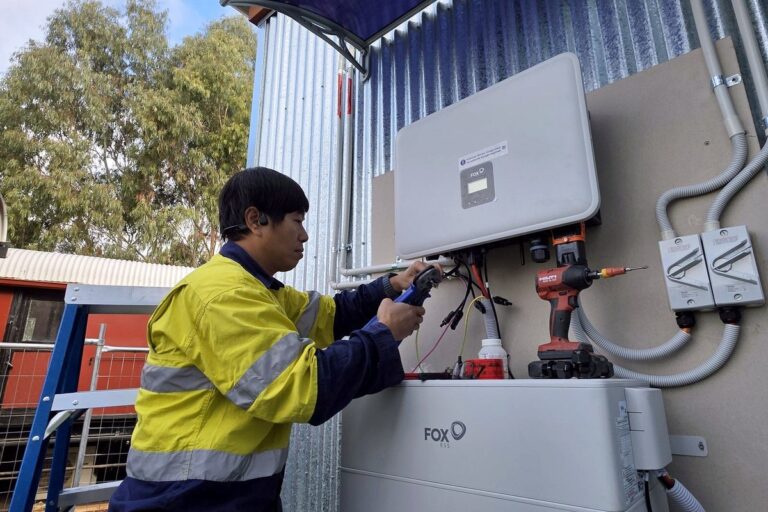
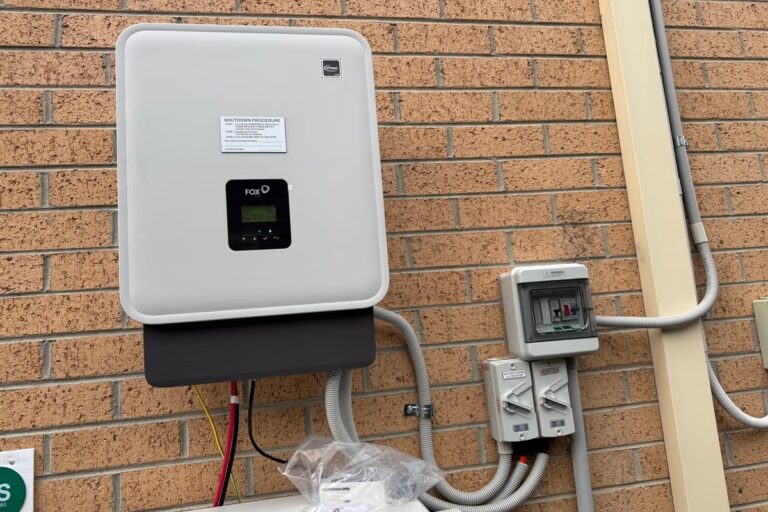
Wire it in. Battery to inverter, inverter to switchboard, plus the isolators and protection the standard requires. If your board is being upgraded, that happens here, and it is the part that most often stretches the day.
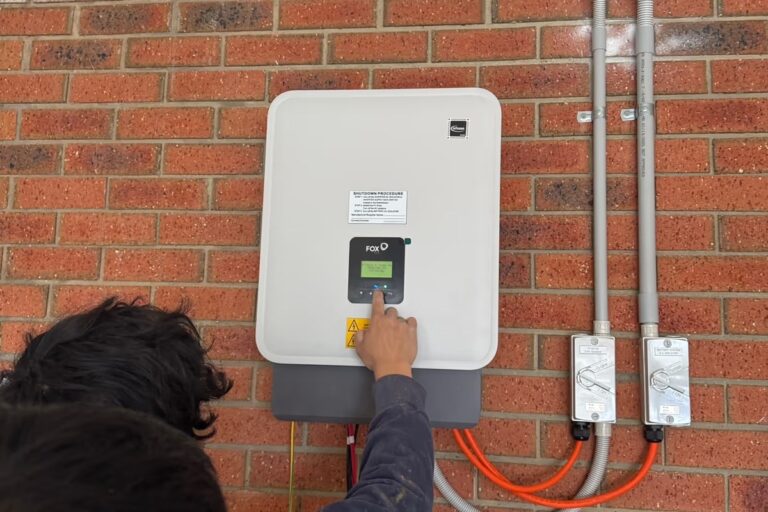
Test and commission. The system is energised, protection is tested, and the inverter is configured for your tariff and your distributor’s export settings. This is not a formality. A battery configured on the wrong tariff will charge and discharge at the wrong times, and you will not notice it on a bill for months.
Set up the app before we leave. You should be able to see your own generation, charge level and consumption on your phone before the van moves. If an installer leaves without doing this, you have no way of telling whether the system is working properly.
What “commissioned” should look like
Commissioning is where the corners get cut, because it is invisible. A finished install should leave you with:
- The system energised and exporting or charging as expected
- Protection devices labelled at the board
- The inverter configured for your actual retail tariff, not a default
- The monitoring app on your phone, logged in, showing live data
- Documentation for the connection and the equipment warranties
Ask for that list. It is a reasonable thing to expect and it takes an installer about fifteen minutes to walk you through.
Timeline, quote to switched on
For a typical Melbourne retrofit with no switchboard surprises:
- Site check and written quote
- Connection application to your distributor
- Install day, one day for a standard retrofit
- Commissioning and app handover, same day
- Follow up once you have a full billing cycle of data
The variable in the middle is the distributor. Approval turnaround differs between the five Victorian distributors and changes with their workload, so any installer quoting you a fixed number of days for every job is guessing.
Bigger jobs are the same sequence, more of it
The same steps scale. At Mansfield Heritage Museum we installed 16.15 kW of solar with a 55.68 kWh battery system, which is a commercial scale job, and it followed exactly the sequence above with more units, more protection and a longer commissioning list. If you want to see what that looks like end to end, the full project write up is here.
What we do differently
Two things, both boring, both the reason people call us back.
We check your bill before we quote a size. Sizing from a floor area or a household headcount produces a number that suits the seller. Sizing from your actual evening consumption produces a number that suits your house. See our guide on what size battery you actually need.
We come back. Two months after commissioning, when you have a full bill on the new system, we go through it with you and check the install against what we told you it would do. If it is not behaving, that is when you find out, not two years later.
Frequently asked questions
How long does a home battery installation take?
A standard residential retrofit is a one day job for a two person crew. Switchboard upgrades and whole home backup wiring can extend it.
Do I need to be home?
Yes, at the start for access and at the end for the handover and app setup. You do not need to be present for the middle of the day.
Will my power be off?
Yes, for part of the day while the board is worked on. We tell you roughly when so you can plan around anything that matters.
Can a battery go anywhere?
No. AS/NZS 5139 sets out where battery systems can be located, including clearances and ventilation. Garages and protected external walls are the usual answers. Habitable rooms and unventilated cupboards are not.
Do I need approval from my electricity distributor?
Yes. Any inverter energy system connected to the grid needs approval from the distributor that services your street, and the application goes in before installation.
What usually changes the price after the site check?
Switchboard upgrades, meter work, and the scope of backup wiring. Those three account for most of the movement between an indicative price and a final quote.
The short version
The battery is the easy part. Your switchboard, your meter, your distributor and your backup scope are what decide the price and the date. An installer who walks you through those before you sign is telling you how the job actually works. One who does not is hoping you find out later.
If you want a written number for your place, send us your latest power bill and we will size it against your own usage rather than an average house.